We’ve all heard the phrase “Everything in moderation” at some point in time and well, I think this is a misunderstood or maybe better stated, misused term. I whole-heartedly disagree with the concept of "moderation" as it is used in the health community. Often times, people will use “moderation” as a license to eat poorly, not train hard (or miss a workout) or as an excuse not to work hard at improving their health. C'mon, you've heard it before, “Hey, I worked out hard yesterday so I can justify eating this donut." That's the "everything in moderation" philosophy for most. But keep this in mind, when you pursue a health and fitness program in moderation, be prepared to achieve moderate results. Hey, if that's OK with you, then fine, but if you are looking to achieve more than average results, a moderate attitude will be your pitfall.
Because the general public misconstrues moderation, they fail to focus more on what I believe to be a more reasonable approach which is BALANCE. Balance, to me, is very important to succeeding and meeting your desired goals. Without the right balance in your program you are likely to hinder performance. In general, to achieve a higher level of overall health and well-being there needs to be an emphasis put on certain aspects. I won’t delve too deeply into each one but individualized attention needs to be placed on specific areas such as nutrition, strength training, cardiovascular conditioning, flexibility and recovery - and all need to be viewed with equal importance. You can’t just focus on your strength training and have little regard for your nutrition and expect to succeed, nor will proper nutrition combined with a solid strength program insure optimum results without the right "balance" of cardiovascular work and ample rest and recovery.
Again, the five factors that I consider of utmost importance for overall health and which need to be done properly for optimum results are:
* Strength Training
* Cardiovascular Conditioning
* Flexibility Training
* Nutrition
* Rest/Recovery
Think about how you can improve on any or all of these aspects and work to achieve balance and leave moderation out of the equation. - Fred Fornicola
Thursday, September 27, 2007
Wednesday, September 26, 2007
Exciting News

After careful consideration, I have decided to expand the services of Premiere Personal Fitness beyond my personal, one-on-one training. Very soon I will be offering a select group of products that very much go hand-in-hand with my training philosophy. These items, I feel, are worth investing in to augment one's level of strength and fitness. As an added bonus, they will enable an individual to train more productively alone or with a partner, at a gym, at home or even on the road.
I will also be offering in-depth phone consultations, training on the products I will be endorsing, corporate services and a host of other amenties to be added later on.
Right now, my web developer is working on setting up my website to advertise these products and services and we hope to have the site updated very soon. Anyone interested in discussing any of the services or products, feel free to email me at fredfornicola@optonline.net or call Premiere Personal Fitness at 908-433-4542.
Fred Fornicola
I will also be offering in-depth phone consultations, training on the products I will be endorsing, corporate services and a host of other amenties to be added later on.
Right now, my web developer is working on setting up my website to advertise these products and services and we hope to have the site updated very soon. Anyone interested in discussing any of the services or products, feel free to email me at fredfornicola@optonline.net or call Premiere Personal Fitness at 908-433-4542.
Fred Fornicola


Friday, September 21, 2007
Can't Have It Both Ways
There are many myths or maybe better stated misunderstandings in the field of fitness that have prevailed for countless years. One for example, is many are under the false pretense that if you perform low reps with heavy weights you will build bulk and if you use higher repetitions you’ll become more defined. Other misguided notions would be things such as spot reduction and barbell curls are to add size to your biceps and concentration curls add peak, but there is one that was brought to my attention by a friend who trains individuals one-on-one. He was telling me how one of his female clients didn’t want to work her legs too much because she feared that her lower body would become too large and muscular and she wouldn’t look feminine. This is a valid concern and one I respect, but her argument didn’t hold much water when she became insistent that she needed to do a lot more abdominal work to make her abs smaller and more defined. This poses a dichotomy now doesn’t it? How can one approach (in this example, training her legs) add size and muscularity but not have the same result when she targets her abdominals? The answer is, it can’t!
When you stop training a muscle it atrophies, which means it loses muscular size so in an unknowing way, she may be correct in not training her lower body directly (albeit a mistake since the benefits of being stronger and more flexible outweigh the small chance she may enlarge her lower extremities). And if the above statement is true then logic would dictate that she should probably not directly train her abdominals so she can obtain her required results for a smaller midsection.
So what’s the solution? A knowledgeable and conscientious fitness professional would take the time to explain (again) what takes place when muscles are directly stimulated through resistance training and offer the notion that all body parts can benefit from being stimulated. Most importantly, it should be left up to the trainee after they have the understanding that they can’t have it both ways. – Fred Fornicola
When you stop training a muscle it atrophies, which means it loses muscular size so in an unknowing way, she may be correct in not training her lower body directly (albeit a mistake since the benefits of being stronger and more flexible outweigh the small chance she may enlarge her lower extremities). And if the above statement is true then logic would dictate that she should probably not directly train her abdominals so she can obtain her required results for a smaller midsection.
So what’s the solution? A knowledgeable and conscientious fitness professional would take the time to explain (again) what takes place when muscles are directly stimulated through resistance training and offer the notion that all body parts can benefit from being stimulated. Most importantly, it should be left up to the trainee after they have the understanding that they can’t have it both ways. – Fred Fornicola
Sunday, September 16, 2007
Organic or Not
Below is a quick, concise overview from an article at runnersworld.com of the recommended foods that should be consumed organically and a list of foods that aren’t as critical.
I recommend reading the entire article: "The Organic Question"
Organic Shopping GuideWhat does the label mean?
The USDA National Organic Program regulates how the word organic can be used for both domestic and imported foods. The official "USDA Organic" seal signifies a product is at least 95 percent organic. Here's what the other labels mean:
*100% Organic All ingredients must be organic
*Organic Guarantees 95% of the ingredients are organic
*Made with organic ingredients At least 70% of the contents are organic
Spend Wisely
These 12 fruits and vegetables contain the highest levels of pesticides; buy organic to reduce your exposure.
Apples, Bell peppers, Celery, Cherries, Imported grapes , Nectarines, Peaches, Pears, Potatoes, Raspberries, Spinach, Strawberries
Also buy organic meats, poultry, eggs, and dairy to limit your exposure to antibiotics and growth hormones.
Don't Worry (as much)
The pesticide levels of these 12 fruits and vegetables are low to undetectable; okay to buy conventional.
Asparagus, Avocados, Bananas, Broccoli, Cauliflower, Kiwi, Mangoes, Onions, Papaya, Pineapples, Sweet corn, Sweet peas
Choose organic breads, pastas, cereals, and other processed foods when cost and availability allow it.
I recommend reading the entire article: "The Organic Question"
Organic Shopping GuideWhat does the label mean?
The USDA National Organic Program regulates how the word organic can be used for both domestic and imported foods. The official "USDA Organic" seal signifies a product is at least 95 percent organic. Here's what the other labels mean:
*100% Organic All ingredients must be organic
*Organic Guarantees 95% of the ingredients are organic
*Made with organic ingredients At least 70% of the contents are organic
Spend Wisely
These 12 fruits and vegetables contain the highest levels of pesticides; buy organic to reduce your exposure.
Apples, Bell peppers, Celery, Cherries, Imported grapes , Nectarines, Peaches, Pears, Potatoes, Raspberries, Spinach, Strawberries
Also buy organic meats, poultry, eggs, and dairy to limit your exposure to antibiotics and growth hormones.
Don't Worry (as much)
The pesticide levels of these 12 fruits and vegetables are low to undetectable; okay to buy conventional.
Asparagus, Avocados, Bananas, Broccoli, Cauliflower, Kiwi, Mangoes, Onions, Papaya, Pineapples, Sweet corn, Sweet peas
Choose organic breads, pastas, cereals, and other processed foods when cost and availability allow it.
Wednesday, September 12, 2007
A Book Review
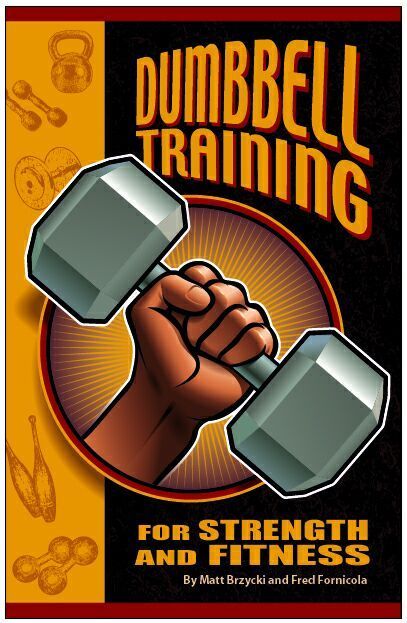
There is an old saying, "What goes around, comes around", and that seems to be exactly what is happening in the fitness industry these days. I was pleased to hear of a new book on the market titled, "Dumbbell Training for Strength and Fitness” by Matt Brzycki and Fred Fornicola. At a time when the industry has become thick with convolution, Brzycki and Fornicola have cut through the complexity to bring both the beginner and advanced trainer back to school. Almost lost in the shuffle of contemporary training technology, the bookresurrects the basic dumbbell to its rightful position as a very effective workout tool. In researching my own book, I was led to interview co-author Fred Fornicola. Fornicola stressed the emphasis of safety, efficiency, and effectiveness in the training protocols he and Brzycki present in their work. With decades of training experience between the two athletes/authors, they had no difficulties collecting contributions from almost two dozenprominent strength coaches in the industry who share common ground inthe many philosophies of strength training. Brzycki and Fornicola cementthis dumbbell training commonality in a bed of solid coaching information for the rank beginner to the advanced trainer. This is definitely not a book out to simply try to please everyone. The authors are not afraid to challenge some current sacred ground endorsed by many in the coaching field. The controversial applications of sports specific training, explosive training, and training in an unstable environment are examined for soundness and validity. The dumbbell may not be extravagant in its appearance, but its practicality as a very effective training tool can be traced back centuries, even as far back as the Greeks. Our modern day Iron Game pioneers of this century also benefited tremendously from dumbbell exercise, and were training the muscles of the trunk long before "Core and Functional Training" became buzz words. This book should be in the library of every serious trainer out there working in the industry. Matt Brzycki and Fred Fornicola have done a great job in simplifying the unnecessarily complex views of today’s “trends” and collapsing the time required to produce fantastic results with such minimal equipment. The book is excellent, the timing is right; the price is an insult to the experience of these two men. Good work Matt and Fred! - Randy Roach, Author of “Muscle, Smoke & Mirrors”
Order Your Copy HERE
Monday, September 10, 2007
Beyond the Rhetoric
We all like to get more ideas so we can expand our knowledge base, improve our fitness and the fitness of those we train. More so than ever, we unfortunately realize that there are many sources in our field of strength and conditioning that have tainted the fitness world, offering the proviso that they and they alone “have the secret.” Mistakenly, many people get reeled in to these biased resources and find themselves blindly following a ritualistic approach that is no better than a pumped of version of the basics. It becomes a voyage of the blind leading the blind.
So where can you go to continually educate yourself without having to sift through all the muck and mire and get some impartial ideas? Lately I’ve been checking out sites that are about running and biking. I do both activities and after delving deeper, I found that these sources offered some solid information on strength and conditioning training for their particular activity. Of course, I didn’t agree with all of their recommendations, but their suggestions are open-minded and based on helping the respective athlete improve their performance without selling them a bill of goods or suggesting that there was only “one best way.” These resources, with their offering of general information, allow the new as well as the experienced trainee to sift through very easily the simple, yet effective ideas without all the rhetoric.
Here is one you can start with. - Fred Fornicola
So where can you go to continually educate yourself without having to sift through all the muck and mire and get some impartial ideas? Lately I’ve been checking out sites that are about running and biking. I do both activities and after delving deeper, I found that these sources offered some solid information on strength and conditioning training for their particular activity. Of course, I didn’t agree with all of their recommendations, but their suggestions are open-minded and based on helping the respective athlete improve their performance without selling them a bill of goods or suggesting that there was only “one best way.” These resources, with their offering of general information, allow the new as well as the experienced trainee to sift through very easily the simple, yet effective ideas without all the rhetoric.
Here is one you can start with. - Fred Fornicola
Wednesday, September 05, 2007
Inch by Inch
In one of my many conversations with the now retired legendary NFL strength coach Kim Wood, we discussed training individuals who are currently “in season” for their athletic endeavor. The gist of the discussion was on the idea of how to implement a strength program while someone is involved in their chosen sport or activity and how to apply a smart and effective program to compliment their focus of that activity or sport. The depth of the discussion goes beyond what can be written here since it isn't a cut and dry answer because as with everything, it's individually based but the conversation did however gravitate to an area of thinking that I've subscribed to for many, many years and feel can be beneficial to many individuals – especially those who are in season.We discussed how too many people get focused on numbers and just "lift weights" and make that their sole source of progression, and although they may use good form, they may not be focusing as well as they could on each and every repetition. I have always subscribed to the idea that the quality of the work far exceeds the amount being used and quality should be prioritized above quantity. Focusing on “quality of work” takes the stress of the exercise and places it on the muscles - where it belongs.I have no ego - I have no one to impress - I have no one who cares how much I can "lift" – my priority is to train safely and have exercise be more beneficial to my life. To enforce this approach, I have gotten to a point where I stopped counting my repetitions and focus totally on the quality of my work - feeling the muscles being used - INCH BY INCH. I have coached some of my clients on this as well – and those who can “dial in” to what I’m suggesting have commented on how much more intense their sessions are and how full their muscles feel. They also noted how much more sore they feel and how “deep” they noticed the muscles are being worked. Keep in mind they were not sloppy before – they are just very focused and even more deliberate now.For those of you who want to give it a try, reduce your poundage’s by about 20% or if you are accustom to performing higher repetitions (15 or more), anticipate a 20-25% reduction if you go very controlled. Do not count reps, do not count time – just connect your “mind to muscle” and FEEL every fiber working inch by inch and hold the contracted position for a 1001 count. I can almost guarantee this will be a new experience for you and one you will find to be very beneficial. - Fred Fornicola
Thursday, August 30, 2007
Try It and Find Out
“Try it and find out!” are probably the simplest words ever spoken, yet by far the most influential. Quite often, people ask opinions or suggestions from others who they feel or deem to be more knowledgeable than themselves. And like most often times, a person will respond by either regurgitating what they were told or think to be a correct response based on something they’ve read, have seen or possibly heard. Few are ever capable of recognizing what they’ve actually gained from personal experience because they are anticipating what they were told to expect or they feel they should be giving an “obvious or anticipated” response. And unfortunately, fewer individuals respond with what would be the best response which is “I don’t know”. For those who really “don’t know”, this would be the best possible (and you would think the most obvious) answer they could provide. For others who really “do know”, this too would be the best possible answer they could provide. Allow me to explain.
Too often, as I stated previously, individuals dole out recommendations with little or no working knowledge. More often than not it would be best to provide no comment or suggestion at all, but as I stated, most people need to express their thoughts. For those who truly understand what is of value, the sound advice of “Try it and find out” can be the best counsel one could ever offer. Being unique individuals with distinct needs, one can through trial and error discover what is in fact best for them.
I’ll leave you with this provoking quote from Luc de Clapiers de Vauvenargues: “The things we know best are things we haven’t been taught.” - Fred Fornicola
Too often, as I stated previously, individuals dole out recommendations with little or no working knowledge. More often than not it would be best to provide no comment or suggestion at all, but as I stated, most people need to express their thoughts. For those who truly understand what is of value, the sound advice of “Try it and find out” can be the best counsel one could ever offer. Being unique individuals with distinct needs, one can through trial and error discover what is in fact best for them.
I’ll leave you with this provoking quote from Luc de Clapiers de Vauvenargues: “The things we know best are things we haven’t been taught.” - Fred Fornicola
Tuesday, August 28, 2007
Arthur Jones
Arthur Jones revolutionized strength training and the world of bodybuilding back in the early '70's by challenging mainstream thinking when he brought Nautilus equipment and his principles of hard, brief training to the forefront.
Arthur challenged the industry hard, leaving a wake in his path, and while he was not adorned by many, he was highly respected by those who came in contact with him. His straightforward approach and hard-nosed logic made Arthur Jones a man, who when he spoke, people listened.
I consider myself to be fortunate to have learned of Arthur Jones when I was at the tender age of 16 and have learned a great deal from his writings and applying his philosophy on training. I am also very lucky to have friends who were "there" when Nautilus and high intensity training were pioneering a more safe, efficient and effective means of exercise.
Today, Mr. Jones died at his home in Florida and he leaves a legacy that only those who knew him could truly understand. I offer my condolences to his friends and family and appreciate what he has done for me and the fitness industry. I don't think there will be another like Arthur Jones.
Arthur challenged the industry hard, leaving a wake in his path, and while he was not adorned by many, he was highly respected by those who came in contact with him. His straightforward approach and hard-nosed logic made Arthur Jones a man, who when he spoke, people listened.
I consider myself to be fortunate to have learned of Arthur Jones when I was at the tender age of 16 and have learned a great deal from his writings and applying his philosophy on training. I am also very lucky to have friends who were "there" when Nautilus and high intensity training were pioneering a more safe, efficient and effective means of exercise.
Today, Mr. Jones died at his home in Florida and he leaves a legacy that only those who knew him could truly understand. I offer my condolences to his friends and family and appreciate what he has done for me and the fitness industry. I don't think there will be another like Arthur Jones.
Thursday, August 23, 2007
And The Secret Is......
Hey, everyone wants to know the "secret" to looking and feeling good - and according to the marketing whores who manufacture ridiculous products and commercial gyms and trainers who offer the "latest and greatest" trendy craze, you'd really think there was a secret to becoming stronger and better fit.
So, because I'm such a nice guy, I'll let you in on the industry secret...... and that secret is, there is none!
No magic potion or exilir nor vibrating table, wobbly board or special amount of sets and reps lend themselves to being anything more than a game of Three Card Monty for the fool who is willing to play. Success in your fitness (and let's face it, in anything you do) revolves around using common sense, working hard and being consistent at your endeavor so those of you out there hoping the next Men's Health magazine will give you the next clue to great abs or you ladies are hoping to look like a Hollywood movie star next time you take your "butts and guts" class, understand that this may be just a fun way for you to achieve your fitness - and that's OK, but don't think for one minute that you are embarking on the ride to victory in your pursuit of physical greatness because 999 times out of 1,000 - you're on the wrong road. - Fred Fornicola
So, because I'm such a nice guy, I'll let you in on the industry secret...... and that secret is, there is none!
No magic potion or exilir nor vibrating table, wobbly board or special amount of sets and reps lend themselves to being anything more than a game of Three Card Monty for the fool who is willing to play. Success in your fitness (and let's face it, in anything you do) revolves around using common sense, working hard and being consistent at your endeavor so those of you out there hoping the next Men's Health magazine will give you the next clue to great abs or you ladies are hoping to look like a Hollywood movie star next time you take your "butts and guts" class, understand that this may be just a fun way for you to achieve your fitness - and that's OK, but don't think for one minute that you are embarking on the ride to victory in your pursuit of physical greatness because 999 times out of 1,000 - you're on the wrong road. - Fred Fornicola
Tuesday, August 14, 2007
Abbreviated Routines
Dr. Ken Leistner wrote a great article (one of many) back in December 2000 in the Hard Training Newsletter entitled “More On Abbreviated Routines”. Doc summed up how an abbreviated routine based around “squats” worked very hard two times a week and a couple pressing and pulling movements would more than satisfy the catalyst to improve one’s muscular (and cadiorespiratory) strength. Doc Ken also stated (and I concur) how many people are afraid of an abbreviated routine that involves fewer than four or five exercises done for one all-out effort and that that type of workout isn’t enough “work”.
I believe that many individuals, especially those who use recreational activities often, would benefit tremendously from an abbreviated or limited training program. If the following type movements aren’t contraindicating to an individual, a focus on some type of deep-knee bend, an overhead press and a pulling movement (especially one from the floor) would enable a trainee to stimulate all the major muscle groups if worked hard and consistently two or three times per week. A selection of bodyweight exercises, dumbbells, barbells, stones, sand bags and other odd objects would certainly fit the bill for a person to perform enough work to stimulate the overall musculature. Fred Fornicola
I believe that many individuals, especially those who use recreational activities often, would benefit tremendously from an abbreviated or limited training program. If the following type movements aren’t contraindicating to an individual, a focus on some type of deep-knee bend, an overhead press and a pulling movement (especially one from the floor) would enable a trainee to stimulate all the major muscle groups if worked hard and consistently two or three times per week. A selection of bodyweight exercises, dumbbells, barbells, stones, sand bags and other odd objects would certainly fit the bill for a person to perform enough work to stimulate the overall musculature. Fred Fornicola
Monday, August 06, 2007
Staying Lean
I have always had trouble keeping a lean tight appearance. When I was competing in Body building in the 60’s and 70’s I tried all the suggestions that were common then. Training everyday and sometimes twice a day. Higher reps were a common answer. We also had our share of the “latest and Greatest” fat removing supplements. I tried them all, and it did work on my wallet. It got very lean. I never have had a problem looking “bigger.” Sometimes I looked much bigger than I really was. A blocky, thick look was handed down by my Grand Father. It missed my Dad. He was always very lean and muscular.
I was in the Gym everyday, pounding away. A few of my training partners had no problem at all staying lean and muscular. No thought was given to genetics back then. It had to be some secret training method. It never did occur to me that these guys were training just like me but getting and staying lean when I wasn’t. The answer had to be in the next issue of “Strength And Health” or “Muscular Development” or “Iron Man.” I read the Weider Mags too but didn’t believe much of it’s content. The York Gang were my heroes.
Gradually it dawned on me. I always ate way more than I needed. These same training partners and I would share meals. I really mean “share.” They rarely finished what they were eating and I would eat my portion and whatever they had left. So I’m thinking, “The leanest of these guys don’t have the appetite that I have.” So for a contest that was coming up I decided to cut back on the chow. At that contest I was more lean than ever. I had found the “secret.” For me anyway. This new addition to my training life took a lot of discipline. I was hungry much of the time but I had the “lean look” that I wanted. Carbs were out, and this was long before Dr. Atkins was heard of.
All of the “Fat Burners” only burned a whole in my finances. I had a huge supplement bill every month. Once I found out what I needed to do (for myself) it was pretty simple. Most things are simple when you remove all the BS and hype. Eat sensible and work out hard. No supplements necessary. Just iron and getting up from the table before everyone else.
Today I use the Fitday website to help me stay within a good calorie guideline. I stray now and then but know my body and soon get back on track. I have found that for me the “KISS Method” works everytime. - Jim Bryan
I was in the Gym everyday, pounding away. A few of my training partners had no problem at all staying lean and muscular. No thought was given to genetics back then. It had to be some secret training method. It never did occur to me that these guys were training just like me but getting and staying lean when I wasn’t. The answer had to be in the next issue of “Strength And Health” or “Muscular Development” or “Iron Man.” I read the Weider Mags too but didn’t believe much of it’s content. The York Gang were my heroes.
Gradually it dawned on me. I always ate way more than I needed. These same training partners and I would share meals. I really mean “share.” They rarely finished what they were eating and I would eat my portion and whatever they had left. So I’m thinking, “The leanest of these guys don’t have the appetite that I have.” So for a contest that was coming up I decided to cut back on the chow. At that contest I was more lean than ever. I had found the “secret.” For me anyway. This new addition to my training life took a lot of discipline. I was hungry much of the time but I had the “lean look” that I wanted. Carbs were out, and this was long before Dr. Atkins was heard of.
All of the “Fat Burners” only burned a whole in my finances. I had a huge supplement bill every month. Once I found out what I needed to do (for myself) it was pretty simple. Most things are simple when you remove all the BS and hype. Eat sensible and work out hard. No supplements necessary. Just iron and getting up from the table before everyone else.
Today I use the Fitday website to help me stay within a good calorie guideline. I stray now and then but know my body and soon get back on track. I have found that for me the “KISS Method” works everytime. - Jim Bryan
Tuesday, July 31, 2007
What Are You Talking About…Specifically? (part 3)
Sport-Specific Training – But “Why?”
In my many discussions with those in my field (who I hold the highest regard), we all agree that there are many ways to become stronger. Some ways are safer than others and in some cases, more beneficial overall to the athlete but regardless, there is more than one way to skin a cat.
Because there are so many variations there are times when illogical approaches are suggested – approaches that further probing reveal a lack of understanding of form and function. Ask “why” an individual needs power cleans and you more than likely will hear a response such as “it builds explosiveness” and to which I would again ask “why”. Since their understanding is such that it is merely a regurgitated response from a well-known individual or because their favorite football team does it my second probe of “why” tends to stop them dead in their tracks, usually because they really don’t know why they are doing what they are doing and are just following along aimlessly. I’ve had many brief conversations with people who are sport-specific specific – brief because they can not intelligently explain to me why they need to be specific in the gym nor can they explain to me, for instance, why a leg press, squat, deadlift, lunge or any other deep knee bending movement would somehow differ in developing the muscles of the legs and hips. At that point the conversation usually terminates because they are without an answer or logical reason. Personally, it is beyond my comprehension why it so damn difficult to have someone understand that a person who is looking to improve their performance doesn’t need more than to work at improving their strength and conditioning and perform proper practice for said activity to improve.
Again, I’ll reference my own experiences. After my failed vest experience all I did to improve my basketball was work at my sport and performed resistance training. Hell, I didn’t even do any additional conditioning work because at the time I was training three times a week doing full body workouts for one set to muscular failure and just playing basketball all the time. Through this dedicated effort my knowledge of the game improved, experience was teaching me how to “anticipate” and “respond” better. My speed/quickness improved as well did my jumping (I was able to touch the rim at 5’7”) and not to mention my shooting range increased as well and I could play full court for hours. Instead of wasting time doing simulation work I was applying my efforts into the actual activities that were required to play my sport.
It’s All Vanilla To Me
I always tell a buddy of mine that with the countless number of ice cream flavors out there in the world, vanilla is still the number one favorite flavor. Vanilla is as plain and simple as you can get and yet it sits high as supreme in the ice cream world. Manufacturers add variety and invest countless hours and money into developing new and exciting flavors to wow the industry – and they do for a short time before everyone falls back on old faithful – vanilla. Vanilla, it’s simple, effective – it gets the job done, just like a straightforward strength program consisting of a handful of compound movements worked hard and consistently over time and proper practice of specific movements in your sport. Quite often this “vanilla” approach is shunned because of its simplicity and unfortunately, its advantages ignored. It’s an uncomplicated, established method that doesn’t need accreditation, sponsorship, extensive research or techno terms to define or describe –it’s just a plain old way of producing results that have benefited many an athlete over the course of many, many years. - Fred Fornicola
In my many discussions with those in my field (who I hold the highest regard), we all agree that there are many ways to become stronger. Some ways are safer than others and in some cases, more beneficial overall to the athlete but regardless, there is more than one way to skin a cat.
Because there are so many variations there are times when illogical approaches are suggested – approaches that further probing reveal a lack of understanding of form and function. Ask “why” an individual needs power cleans and you more than likely will hear a response such as “it builds explosiveness” and to which I would again ask “why”. Since their understanding is such that it is merely a regurgitated response from a well-known individual or because their favorite football team does it my second probe of “why” tends to stop them dead in their tracks, usually because they really don’t know why they are doing what they are doing and are just following along aimlessly. I’ve had many brief conversations with people who are sport-specific specific – brief because they can not intelligently explain to me why they need to be specific in the gym nor can they explain to me, for instance, why a leg press, squat, deadlift, lunge or any other deep knee bending movement would somehow differ in developing the muscles of the legs and hips. At that point the conversation usually terminates because they are without an answer or logical reason. Personally, it is beyond my comprehension why it so damn difficult to have someone understand that a person who is looking to improve their performance doesn’t need more than to work at improving their strength and conditioning and perform proper practice for said activity to improve.
Again, I’ll reference my own experiences. After my failed vest experience all I did to improve my basketball was work at my sport and performed resistance training. Hell, I didn’t even do any additional conditioning work because at the time I was training three times a week doing full body workouts for one set to muscular failure and just playing basketball all the time. Through this dedicated effort my knowledge of the game improved, experience was teaching me how to “anticipate” and “respond” better. My speed/quickness improved as well did my jumping (I was able to touch the rim at 5’7”) and not to mention my shooting range increased as well and I could play full court for hours. Instead of wasting time doing simulation work I was applying my efforts into the actual activities that were required to play my sport.
It’s All Vanilla To Me
I always tell a buddy of mine that with the countless number of ice cream flavors out there in the world, vanilla is still the number one favorite flavor. Vanilla is as plain and simple as you can get and yet it sits high as supreme in the ice cream world. Manufacturers add variety and invest countless hours and money into developing new and exciting flavors to wow the industry – and they do for a short time before everyone falls back on old faithful – vanilla. Vanilla, it’s simple, effective – it gets the job done, just like a straightforward strength program consisting of a handful of compound movements worked hard and consistently over time and proper practice of specific movements in your sport. Quite often this “vanilla” approach is shunned because of its simplicity and unfortunately, its advantages ignored. It’s an uncomplicated, established method that doesn’t need accreditation, sponsorship, extensive research or techno terms to define or describe –it’s just a plain old way of producing results that have benefited many an athlete over the course of many, many years. - Fred Fornicola
Wednesday, July 25, 2007
What Are You Talking About…Specifically? (part 2)
Sport-Specific Training - Today
Sport-specific training in its current concept is a means of simulating a movement or exercise in the weight room with the intention of it transferring to the playing field – regardless of what that field is. It is also a protocol of lifting fast to become fast, using low repetitions to bulk and performing power cleans and snatches to make better football players. Of course these are not all of the perceived concepts attached to sport-specific specific training but enough to make one question what the hell someone is thinking when they argue these points. It’s beyond my comprehension why anyone would think performing, for example, a walking lunge would simulate running or how throwing a weighted object will somehow cross over to throwing a football or baseball. The term “sport-specific” in my definition of the term means “specific to ones sport” which means that an athlete should be doing what is specifically needed to perform their activity or sport. If someone wants to improve their golf swing then they should take golf lessons from a qualified coach and then practice, practice and practice some more. Swinging a weighted object of any kind in place of the golf club will not develop club head speed or improve your swing – what it will do is create new mechanics for your body to learn and then distort your regular swing. Plain and simple – there is no transference from one activity to another, which is why movement is SPECIFIC!
The same holds true for developing explosiveness and speed. These skills are developed by becoming stronger, practicing proper skills and techniques, understanding your sport, having acute auditory and visual skills, being perceptive and of course, let’s not forget genetics. I remember watching the great Dick Butkus when he played for the Chicago Bears. You could see him watch as plays evolved and then react with such tenacity and speed. Was it because he was doing power cleans or lifting fast? Hell no, the man knew his sport and his competition and put himself in the right place and the right time. He was strong, determined, understood how to read plays and was an animal on the field – that’s what made him great - and this was all without the benefit of strength training because at that time he didn’t believe in it.
Have you ever experienced or witnessed an individual avoid a car accident merely because they see the accident unfolding as it is about to occur and while observing their surroundings, react instantly? Is it because they work out on a balance board or maxed out on their squats? Nah, I doubt it. They used their auditory and visual skills, maybe even some experience and knowledge of how to handle a situation as this. So, my confusion lies with the idea of transfer - transfer of performing one movement or skill to another. If a power clean is identical to performing movements on the football field then I should be able to eat soup with a fork because it’s the same movement as if I were to use a spoon. If you believe that one needs to stand on an unstable surface to become stable then that leads me to reason that you wouldn’t mind a house built on sand. Why put someone on an unsecured surface to develop their stability? Why have someone risk falling, twisting a knee or ankle, or worse so they can develop balance – and when in hell was the last time you saw anyone play a sport on an unstable surface? Lift fast to be fast? Gotcha, so let’s use momentum and gravity to move the weight, not our muscles to develop speed – right. Think about that, does it make sense to unload the muscle to develop strength and speed? If you give it a moment’s thought you’d realize that the muscles need to do the work to become stronger and just throwing a weight around doesn’t mean you are becoming stronger or becoming faster – it just means you are throwing a weight around. - Fred Fornicola
Part 3 to follow...
Sport-specific training in its current concept is a means of simulating a movement or exercise in the weight room with the intention of it transferring to the playing field – regardless of what that field is. It is also a protocol of lifting fast to become fast, using low repetitions to bulk and performing power cleans and snatches to make better football players. Of course these are not all of the perceived concepts attached to sport-specific specific training but enough to make one question what the hell someone is thinking when they argue these points. It’s beyond my comprehension why anyone would think performing, for example, a walking lunge would simulate running or how throwing a weighted object will somehow cross over to throwing a football or baseball. The term “sport-specific” in my definition of the term means “specific to ones sport” which means that an athlete should be doing what is specifically needed to perform their activity or sport. If someone wants to improve their golf swing then they should take golf lessons from a qualified coach and then practice, practice and practice some more. Swinging a weighted object of any kind in place of the golf club will not develop club head speed or improve your swing – what it will do is create new mechanics for your body to learn and then distort your regular swing. Plain and simple – there is no transference from one activity to another, which is why movement is SPECIFIC!
The same holds true for developing explosiveness and speed. These skills are developed by becoming stronger, practicing proper skills and techniques, understanding your sport, having acute auditory and visual skills, being perceptive and of course, let’s not forget genetics. I remember watching the great Dick Butkus when he played for the Chicago Bears. You could see him watch as plays evolved and then react with such tenacity and speed. Was it because he was doing power cleans or lifting fast? Hell no, the man knew his sport and his competition and put himself in the right place and the right time. He was strong, determined, understood how to read plays and was an animal on the field – that’s what made him great - and this was all without the benefit of strength training because at that time he didn’t believe in it.
Have you ever experienced or witnessed an individual avoid a car accident merely because they see the accident unfolding as it is about to occur and while observing their surroundings, react instantly? Is it because they work out on a balance board or maxed out on their squats? Nah, I doubt it. They used their auditory and visual skills, maybe even some experience and knowledge of how to handle a situation as this. So, my confusion lies with the idea of transfer - transfer of performing one movement or skill to another. If a power clean is identical to performing movements on the football field then I should be able to eat soup with a fork because it’s the same movement as if I were to use a spoon. If you believe that one needs to stand on an unstable surface to become stable then that leads me to reason that you wouldn’t mind a house built on sand. Why put someone on an unsecured surface to develop their stability? Why have someone risk falling, twisting a knee or ankle, or worse so they can develop balance – and when in hell was the last time you saw anyone play a sport on an unstable surface? Lift fast to be fast? Gotcha, so let’s use momentum and gravity to move the weight, not our muscles to develop speed – right. Think about that, does it make sense to unload the muscle to develop strength and speed? If you give it a moment’s thought you’d realize that the muscles need to do the work to become stronger and just throwing a weight around doesn’t mean you are becoming stronger or becoming faster – it just means you are throwing a weight around. - Fred Fornicola
Part 3 to follow...
Thursday, July 19, 2007
What Are You Talking About…Specifically?
My original intention for this article was to go through a thorough explanation of the misnomer “sport-specific training,” but after a few conversations over the last few days with some of my peers who have encountered some “debates” over this idiotic concept, I’ve decided to just cut to the chase and discuss this plain and simple.
Sport-Specific Training – The Old Days
In my day, sport-specific training (which I don’t believe was even a trendy term at the time) meant becoming more physically fit by strength training, running, performing wind sprints etc., along with hours upon hours of skillful practice of one’s chosen sport. Currently, the term “sport-specific training” has taken on a completely different connotation, largely in part because of the commercialization of the strength and conditioning industry. At the present time, the idea of sport-specific training is touted as being able to duplicate or imitate a specific "skill" or aspect of ones sport in the weight room atmosphere. As for me, it meant practicing sprinting and making cuts up and down the court while dribbling a basketball, rebounding, shooting and actually performing game-like activities, not running with a parachute on my back or throwing weighted balls or jumping off boxes.
Here’s a personal anecdote that I’ll use as an example. I played basketball my entire young life and back in the late 1970’s, weighted vests became popular (what, do you think weighted vests are new?) so I purchased one. I wore that thing all the time because I was going to improve my jumping, my speed and my quickness – well, so I thought. I ran, jumped and practiced shooting every day with that vest on and in the beginning I had trouble making any of my shots, my running stride was out of whack and my timing was way off. Why? - Because I was learning new motor skills. After about a week I started making my shots and started to get my timing down. Now, after that week I decided to go play some pickup games sans the vest and to my surprise, I couldn’t make a shot to save my life. My timing was way off, my stride was not right and I miss timed my jumps. Why? I had developed new learning skills with the vest on which DID NOT cross over to my needs on the basketball court. - Fred Fornicola
Part 2 to follow....
Sport-Specific Training – The Old Days
In my day, sport-specific training (which I don’t believe was even a trendy term at the time) meant becoming more physically fit by strength training, running, performing wind sprints etc., along with hours upon hours of skillful practice of one’s chosen sport. Currently, the term “sport-specific training” has taken on a completely different connotation, largely in part because of the commercialization of the strength and conditioning industry. At the present time, the idea of sport-specific training is touted as being able to duplicate or imitate a specific "skill" or aspect of ones sport in the weight room atmosphere. As for me, it meant practicing sprinting and making cuts up and down the court while dribbling a basketball, rebounding, shooting and actually performing game-like activities, not running with a parachute on my back or throwing weighted balls or jumping off boxes.
Here’s a personal anecdote that I’ll use as an example. I played basketball my entire young life and back in the late 1970’s, weighted vests became popular (what, do you think weighted vests are new?) so I purchased one. I wore that thing all the time because I was going to improve my jumping, my speed and my quickness – well, so I thought. I ran, jumped and practiced shooting every day with that vest on and in the beginning I had trouble making any of my shots, my running stride was out of whack and my timing was way off. Why? - Because I was learning new motor skills. After about a week I started making my shots and started to get my timing down. Now, after that week I decided to go play some pickup games sans the vest and to my surprise, I couldn’t make a shot to save my life. My timing was way off, my stride was not right and I miss timed my jumps. Why? I had developed new learning skills with the vest on which DID NOT cross over to my needs on the basketball court. - Fred Fornicola
Part 2 to follow....
Wednesday, July 18, 2007
Round Three
Matt (Brzycki) and I received some very good news yesterday regarding our book "Dumbbell Training for Strength and Fitness". Sales have been going quite well and we need to do a third produciton run. We are just a couple hundred copies away from hitting the 6,000 mark in sales in just over a years time.
Matt and I are very proud of this project and would like to thank everyone who has supported us in this effort.
Best in Health,
Fred Fornicola
Matt and I are very proud of this project and would like to thank everyone who has supported us in this effort.
Best in Health,
Fred Fornicola
Wednesday, July 11, 2007
Safety First
A sad event occurred on July 10th when a young teen, who was lifting weights alone at his home, was killed in what the news called a "freak accident."
In my opinion, it is surprising that the death toll isn't higher since this scenario seems to be the norm for young teens (as well as adults) who perform exercises alone - especially those exercises that require proper spotting by a qualified individual.
Strength training is a great activity but safety is paramount - especially when you are training alone so use discretion and forgoe ANY exercise - even if it's the "best of the best" if you can be injured - or worse!
Here is the article regarding the death of this young teen.
In my opinion, it is surprising that the death toll isn't higher since this scenario seems to be the norm for young teens (as well as adults) who perform exercises alone - especially those exercises that require proper spotting by a qualified individual.
Strength training is a great activity but safety is paramount - especially when you are training alone so use discretion and forgoe ANY exercise - even if it's the "best of the best" if you can be injured - or worse!
Here is the article regarding the death of this young teen.
Tuesday, July 10, 2007
Trusting What You Know
"The things we know best are things we haven't been taught." - Luc de Clapiers de Vauvenargues
Exercise is (or at least, should be) a personal endeavor and to follow specific "rules" often throws a monkey wrench into the works. Too often people handcuff themselves when they use these arbitrary guidelines and because of this, their fitness suffers. They often don't go by "feel" and don't trust what their instincts tell them because certain rules prohibit or recommend otherwise. They don't listen to what their body (physical, emotional, mental and spiritual) needs and their fitness program is lacking - all because of what they've been taught.
It makes perfect sense to seek out knowledge but there is no better teacher then your own experience. Fred Fornicola
Exercise is (or at least, should be) a personal endeavor and to follow specific "rules" often throws a monkey wrench into the works. Too often people handcuff themselves when they use these arbitrary guidelines and because of this, their fitness suffers. They often don't go by "feel" and don't trust what their instincts tell them because certain rules prohibit or recommend otherwise. They don't listen to what their body (physical, emotional, mental and spiritual) needs and their fitness program is lacking - all because of what they've been taught.
It makes perfect sense to seek out knowledge but there is no better teacher then your own experience. Fred Fornicola
Wednesday, July 04, 2007
Monday, July 02, 2007
Hips & Girdles
In a quick conversation with my daughter early this morning we were discussing throwing the shot put. She is interested in throwing the shot (she's in 6th grade) and is supposed to learn over the next few practices to see if she has what it takes to throw. I briefly reminded her that she not only needs the strength from her shoulders but it is her legs - in particular her hips that give her the power and for her to focus on using her hips when she is doing the shot. If you think about it, the hips are involved in every aspect of sports and is the main source of where your power comes from. Taking that in to consideration, a solid exercise program MUST involve the hips structure in some fashion. If someone just did a multi-joint lower body movement like a deep knee bend (squat or leg press for instance) or some form of deadlift they would satisfy more than half their requirements for providing the largest muscle group thorough stimulation. Second to the hips is the shoulder “girdle” which is extremely important in every aspect of athletics and daily life and should be worked thoroughly with some type of overhead pressing movement, therefore a workout consisting of a set of overhead presses for 15-20 all-out repetitions followed by a set of stiff-leg deadlifts for 35-50 repetitions should nail if for most people - everything else like pushups, curls and maybe a pulldown would be "extra" and more than likely, not necessary on a constant basis. - Fred Fornicola
Subscribe to:
Posts (Atom)