Whether you are scientific about training, fly by the seat of your pants or anywhere in between, you can't help but bring your personal preferences in to your training. Over the many years I have had the privilege of speaking with several (and I mean several) of what I would call "well versed" strength coaches/trainers and a common factor that I've noticed is that a lot of them believe in certain things based on their personal likes and dislikes.
For instance, you may read where a strength coach will recommend training 2x per week and advocate 20 rep squats. Why? First and foremost, if worked hard it can be productive but secondly, a lot of personal preference goes into that program. You may see another coach recommend the bench press and have a program based around it and then another coach emphasize the overhead press. Again, more than likely the bench press coach likes the BP and will incorporate it into their program because they feel there is value. Another example is a coach recommending 3x per week training instead of 2 or a person who suggests additional CV work and then another who recommends none.
My point here is this - a lot of what we read (and sometimes write) is based on what the individual finds to be of value to THEM and then passes it along as value to others. Nothing inherently wrong with doing that but it is up to the reader (and the writer) to not read (or speak) as what is written to be gospel and to understand and entertain that which is proposed and embark on the journey themselves. - Fred Fornicola
Monday, March 26, 2007
Sunday, March 18, 2007
A New Way To Work Out?
For many years I ran and did bodyweight exercises, because I didn't like weights and believed they would make you slow, bulky, etc,.. I used what I learned in the marine corps, which included push ups, pull ups, squat thrusts, etc. I even did some rope climbing and wrestlers bridges I learned in high school. I did these things when I got a sedentary job after years of physical work. I still use bw exercises and like them.NOW, all this stuff is being presented as if it's been some big secret kept from the public! Really? I had no idea I was so avant garde! The truth is, a lot of people buy into this boot camp stuff for the same reason they buy into Pilates or whatever. They think it will make them look substantially different than they do, in some relatively easy fashion. And there is a certain "tough guy" glamour that appeals to some people. I have seen ads about "blow-torching off fat", like if you do a hard set of bw squats or swing your kettlebell you'll suddenly drop tons of flab. Forget about diet. Forget about how you have to really work hard consistently.I'm waiting for some of these folks to pay some big guy in a uniform to kick sand in ther faces and scream at them about being "pukes and quitters who ain't packing the gear"... I'm hoping the next big craze is "manual labor fitness" so I can get some of these unfortunates to put in my new rock garden and deck. This too, will pass. - Regards,Griff


Sunday, March 11, 2007
Lower Body Strength from Running
It is true that you can only get stronger to a point, but that is the limiting factor with all exercise modalities - strength training included Regardless of the choosen exercise squats, leg press, or running leg strength will only be developed up to specific point based on many factors. Some of which are body leverages, ranges of motion, and genetic limitations as to how fast or how much one can lift or run. IMO being able to overload is not a factor with any activity. Since any modality can be made systamatically more challenging.
If overload really is making the body or muscle area perform more work than currently capable than the following are ways to overload a running workout.
1. progress in speed (jog to run)
2. progress in distance relative to time
3 perform intervals or spriniting activities / add more intervals
4. reduce the rest period of said intervals
5 run hills / same procedures are intervals
6. perform a distance course with hill intervals - if course has hills
7. change the running surface. grass is more challenging than the road - beach sand is probably the most challenging.
8. perform other running activities as intervals ( bear crawls, crab walks, side shuffle, backwards running) (side note bear crawls on beach sand is a killer)
9. Add bodyweight squats or lunges at periods of a long run. every 5 minutes perform 50 squats.
10. perform sprints with push-up intervals. If you think push-ups don't work your hips perform them after sprints.
I just think that all the above are ways of having the lower body perform more work than it's currently able. therefore making it stronger!
Just a thought since most commerical gyms don't have much in the way of lower body exercises, especially if you can't squat or deadlift. Just food for thought. - Doug Scott, Strength Coach
If overload really is making the body or muscle area perform more work than currently capable than the following are ways to overload a running workout.
1. progress in speed (jog to run)
2. progress in distance relative to time
3 perform intervals or spriniting activities / add more intervals
4. reduce the rest period of said intervals
5 run hills / same procedures are intervals
6. perform a distance course with hill intervals - if course has hills
7. change the running surface. grass is more challenging than the road - beach sand is probably the most challenging.
8. perform other running activities as intervals ( bear crawls, crab walks, side shuffle, backwards running) (side note bear crawls on beach sand is a killer)
9. Add bodyweight squats or lunges at periods of a long run. every 5 minutes perform 50 squats.
10. perform sprints with push-up intervals. If you think push-ups don't work your hips perform them after sprints.
I just think that all the above are ways of having the lower body perform more work than it's currently able. therefore making it stronger!
Just a thought since most commerical gyms don't have much in the way of lower body exercises, especially if you can't squat or deadlift. Just food for thought. - Doug Scott, Strength Coach
Monday, March 05, 2007
Exercise for the Average Person
As a non-athlete, non-bodybuilding home trainer, I found the following quote to be very interesting. For the last few months I have been following a similar bodyweight routine of chins, dips, body rows, pushups and squats. I do one set to failure on each exercise & train 2 days per week. If the weather is good, I will walk a couple of days per week also. I have found this type of workout to be perfect for the needs of average people that are not interested in sports performance or "bodybuilding", but simply need to increase their "functional ability" for everyday life (mowing the lawn, carrying groceries up the stairs, moving some furniture, etc). In August, I will begin my 48th trip around the sun. I no longer have the time, nor the desire, to try to look like a bodybuilder or male fitness model. I'm just trying to stay in shape for living. When I compare myself to my peer group & not 25 year olds, I feel that I stack up pretty well. – Jay Setser
Tuesday, February 27, 2007
Raising Your Heart Rate
I think an elevated HR due to lifting heavy weights is different than that of running or other activities. An elevated HR response can be caused by a number of things outside of the "exercise your heart model" - if you will. Body positioning has a lot to do with heart rate responses. If you’re performing a set of leg presses, the position of the body - knees tucked into chest - will cause the heat rate to elevate. If you are performing presses flat on your back your heart rate will be lower than if you were pressing standing up- even if the relative intensity is the same. Holding a heavy weight causes an increase in blood pressure with leads to an increased heart rate - just by the nature of the activity. During times or excitement or great stress the heart rate is also elevated because of the release of various hormones - not related to exercising the heart.
I think that heart rate is very specific and is only on factor when determining the effect on improving the fitness of the CV system. The other is oxygen consumption. This is where the term VO2 max stems from - heart rate has always been used because it is easier to monitor in the field. O2 consumption is done in the labs. During traditional modes of CV activity - running-biking- etc. (all but swimming) - the heart rate is elevated in proportion to oxygen consumption - do to the need to transfer oxygen and nutrients to working muscles. So if your heart rate is raised to 150 BPM than Oxygen consumption would also be raised. However, if the HR is elevated because of a specific body position than the oxygen consumption might not be as high. Therefore causing no improvement in CV fitness.
There is no doubt that HIT raises both heart rate and respiration - breathing heavy. I just don't know if it is enough to improve ones fitness without additional CV training. - Doug Scott
I think that heart rate is very specific and is only on factor when determining the effect on improving the fitness of the CV system. The other is oxygen consumption. This is where the term VO2 max stems from - heart rate has always been used because it is easier to monitor in the field. O2 consumption is done in the labs. During traditional modes of CV activity - running-biking- etc. (all but swimming) - the heart rate is elevated in proportion to oxygen consumption - do to the need to transfer oxygen and nutrients to working muscles. So if your heart rate is raised to 150 BPM than Oxygen consumption would also be raised. However, if the HR is elevated because of a specific body position than the oxygen consumption might not be as high. Therefore causing no improvement in CV fitness.
There is no doubt that HIT raises both heart rate and respiration - breathing heavy. I just don't know if it is enough to improve ones fitness without additional CV training. - Doug Scott
Tuesday, February 20, 2007
Daily Activity
I am a big fan of daily exercise in some capacity. whether it be in the form of steady state cardio or high intensity strength training. I feel the body is meant to move and needs to exercised on a regular basis. Anyway here is a workout that I have been playing around with on my non lifting days.
at the local track - but it can be done anywhere.
jog a lap
push-ups ( not to failure or even close)
jog a lap
crunches ( not to failure)
jog a lap
body weight squats ( about a minutes worth)
jog a lap
stretch and cool down
for me this workouts out to about 15-25 minutes of activity and serves to get the "lead out" after a tough workout the day before. - Doug Scott, Strength Coach
at the local track - but it can be done anywhere.
jog a lap
push-ups ( not to failure or even close)
jog a lap
crunches ( not to failure)
jog a lap
body weight squats ( about a minutes worth)
jog a lap
stretch and cool down
for me this workouts out to about 15-25 minutes of activity and serves to get the "lead out" after a tough workout the day before. - Doug Scott, Strength Coach
Tuesday, February 13, 2007
An Under Rated Exercise
I think the pushup is one of the better exercises available for building strength not only in the chest, shoulder and triceps but in the stabilizing muscles such as the upper back, mid section (both abdominal and lower back) and the hip/leg area. For some odd reason, it is often overlooked. Maybe because it isn't high tech or complex enough or maybe it's under valued because a lot of people don't truly understand its worth.
It takes more than just upper body strength to perform a pushup and it can be quite challenging -especially at the end of a workout when the body is tired. A properly performed pushup involves the entire musculature and when incorporated in a strength - body building program it can provide tremendous results. I mean, c'mon, how hard is it to pop of some pushups a couple of days a week, right? – Fred Fornicola
It takes more than just upper body strength to perform a pushup and it can be quite challenging -especially at the end of a workout when the body is tired. A properly performed pushup involves the entire musculature and when incorporated in a strength - body building program it can provide tremendous results. I mean, c'mon, how hard is it to pop of some pushups a couple of days a week, right? – Fred Fornicola
Tuesday, February 06, 2007
Something Old, Something New
Everyone is always looking for something new and improved to add to their fitness routine in order to spark new interest or get over a training plateau. Often times we look for some never before seen exercise, outlandish routine sequence, or new age exercise machine or gadget. However, sometimes something old can be something very new as in the case of one of my recent workouts. Not to long ago I purchased an Atlas Stone, a 40 lbs 10 inches in diameter, stone ball. This exercise devise could quite possibly be one of the oldest forms resistance training. I mean there is nothing new about picking up a “rock” and lifting it in various directions. However, the muscle stimulation is something that must be felt to truly understand. Lifting an odd shaped object forces the body to compensate and use muscles, especially the midsection and upper back, to stabilize the torso in a non-traditional manner. Simple exercises like, overhead press, curls, squats, rows, deadlifts, push-ups really force the body to work hard, which is what training is all about – right! Add to that some more complex or combination lifts and the heart and lungs will really get a workout as well. For example, squat/ press, or power cleans to shoulders, or even the arm curl and press combo will have you feeling the effects similar to any interval workout imaginable. So to get new results out of your training turn to something old and give odd lifting a try. Whether an Atlas stone, sand bag, or drift wood from the beach have fun and get moving. - Doug Scott, Strength Coach
To purchase a stone, contact Steve Slater
To purchase a stone, contact Steve Slater
Friday, February 02, 2007
What Motivates You?
I would have to surmise that those involved in fitness have basically the same goals – staying fit, good health, feeling good – a quality of life that allows us to do what we want physically. These are all goals well worth the effort we expend. Now, I haven’t been pursuing this life style as many years as most, but feel fortunate to have met the right people to help me. Fred Fornicola is one of them who continues to work with me on an ongoing basis. When I drift from my focus of my workouts Fred will always re-center me with the question, “Why are you here and what are you trying to achieve?” Of course, I find myself going back to the important, and correct, answer of “good health”. Fred recently recommended I see a nutritionist to help with my diet and fueling for my cycling activities. In seeing this professional, again I was presented with the questions of what are my goals.
This brings me to the subject of this post. As I thought about what my goals are I realized, at least in my experience, there are different goals. Of course, I listed the obvious of good health. But as I wrote it out I knew, while it was the global goal, it wasn’t the goal that motivated me. When I’m trying to get one more rep and my body is screaming the thought of good health isn’t what makes me push the weight. When I’m in my weekly cycling training session and my heart rate is 172 beats per minute and my legs are burning, good health isn’t what inspires me to push one more gear for the final minute. What gets me to push is the visualization of not getting dropped by a peloton of good cyclists, or being the first one to crest a hill, or winning the final sprint after a 75 mile ride. Do I accomplish all these goals, of course not, but it’s what makes me push for that final rep. So is good health my goal – absolutely. But I have to admit it’s my ego that motivates me.
Competitive edges, prevent injury, mental discipline, staying in shape, pushing the envelope, the challenge – all great motivators but “because I can – where others can’t or won’t.” is an answer I use when someone who is inquiring about my cycling activities will ask why I choose to ride a century (100 miles) or some other physical activity that’s foreign to them. “Because I can” really says it all.
So, I’m curious, what motivates you to push that last rep or to sprint those last 50 yards? - Bob Vale, Fitness Enthusiast
This brings me to the subject of this post. As I thought about what my goals are I realized, at least in my experience, there are different goals. Of course, I listed the obvious of good health. But as I wrote it out I knew, while it was the global goal, it wasn’t the goal that motivated me. When I’m trying to get one more rep and my body is screaming the thought of good health isn’t what makes me push the weight. When I’m in my weekly cycling training session and my heart rate is 172 beats per minute and my legs are burning, good health isn’t what inspires me to push one more gear for the final minute. What gets me to push is the visualization of not getting dropped by a peloton of good cyclists, or being the first one to crest a hill, or winning the final sprint after a 75 mile ride. Do I accomplish all these goals, of course not, but it’s what makes me push for that final rep. So is good health my goal – absolutely. But I have to admit it’s my ego that motivates me.
Competitive edges, prevent injury, mental discipline, staying in shape, pushing the envelope, the challenge – all great motivators but “because I can – where others can’t or won’t.” is an answer I use when someone who is inquiring about my cycling activities will ask why I choose to ride a century (100 miles) or some other physical activity that’s foreign to them. “Because I can” really says it all.
So, I’m curious, what motivates you to push that last rep or to sprint those last 50 yards? - Bob Vale, Fitness Enthusiast
Tuesday, January 30, 2007
My Fat Loss Adventure
I've never been one to attempt to lose weight until recently. It was all about lifting hard, eating, and attempting to gain weight. At 48, I now realize I am not immune to accumulating body fat like any other human being. I'm not as active as in the past, I eat when I'm hungry, and have strayed from a sensible diet to one that consists of many "zero nutritional value" foods (i.e., processed, white flour, high fructose corn syrup, saturated fat, etc.). I do eat some fruits, vegetables, and lean sources of protein, but it was the increase of the aforementioned foods that lead to my "mini-gut." Bottom line: I slowly developed that gut that started getting in the way of putting my socks on in the morning.
Since early December, my scale weight has dropped from 194 to 182. And when I do the pinch test, it's definitely decreased. Here's what I have done and my experiences in the last 5 weeks:
1. I'm eating fewer calories, smaller portions, and making better choices (i.e., carrot sticks over Rice Krispie Treat).
2. Limited intake of white flour products and processed food. A chicken breast and mixed vegetables is it. Before it was that plus non-whole grain pasta and sauce.
3. Water over soda. I've always been a skim milk guy, too.
4. When I get hungry between meals, I fight the urge to eat. I have to tap into that chunk on my stomach.
5. When it is time for one of the three traditional meals of the day (B-L-D), eat, but don't over-eat.
6. No late-night feeding sessions (nothing after 8:00 p.m.)
7. NO CARDIO!! Not that I'm against it, just that I can't run (knee) and loathe standing on treadmill or elliptical trainer. Lesson: you don't have to go on a 45 minute run or 1 hour stationary bike ride to lose fat. Lift in circuit style if you want to huff and puff and get the heart rate up.
8. I have been strength training every other day, six days/week, alternating between upper and lower body. Muscle is metabolically expensive and "wants to go" in the wake of reduced calories, so I attempt to keep it there. However...
9. Interestingly, I have lost some strength in the process. It's due to a combination of my lower calorie intake and being under-recovered due to my lifting frequency (I'll experiment with a normal lifting frequency {2-3 days/week} as time moves forward but right now I want to "be active" more often since I'm not doing the cardio). It's a double edged sword: want to get bigger and stronger? Eat more and lift hard. Want to lose weight? Eat less and exercise more. – Tom Kelso, Strength Coach
Since early December, my scale weight has dropped from 194 to 182. And when I do the pinch test, it's definitely decreased. Here's what I have done and my experiences in the last 5 weeks:
1. I'm eating fewer calories, smaller portions, and making better choices (i.e., carrot sticks over Rice Krispie Treat).
2. Limited intake of white flour products and processed food. A chicken breast and mixed vegetables is it. Before it was that plus non-whole grain pasta and sauce.
3. Water over soda. I've always been a skim milk guy, too.
4. When I get hungry between meals, I fight the urge to eat. I have to tap into that chunk on my stomach.
5. When it is time for one of the three traditional meals of the day (B-L-D), eat, but don't over-eat.
6. No late-night feeding sessions (nothing after 8:00 p.m.)
7. NO CARDIO!! Not that I'm against it, just that I can't run (knee) and loathe standing on treadmill or elliptical trainer. Lesson: you don't have to go on a 45 minute run or 1 hour stationary bike ride to lose fat. Lift in circuit style if you want to huff and puff and get the heart rate up.
8. I have been strength training every other day, six days/week, alternating between upper and lower body. Muscle is metabolically expensive and "wants to go" in the wake of reduced calories, so I attempt to keep it there. However...
9. Interestingly, I have lost some strength in the process. It's due to a combination of my lower calorie intake and being under-recovered due to my lifting frequency (I'll experiment with a normal lifting frequency {2-3 days/week} as time moves forward but right now I want to "be active" more often since I'm not doing the cardio). It's a double edged sword: want to get bigger and stronger? Eat more and lift hard. Want to lose weight? Eat less and exercise more. – Tom Kelso, Strength Coach
Thursday, January 25, 2007
Consistency of Exercise
Often we talk about the importance of staying consist with an exercise plan in order to make it as effective as possible. For the most part, that is true. One must exercise on a routine basis, 2-3 times each week, in order to receive a desirable level of fitness. An important point that is commonly overlooked is the importance of staying consistent with the exercises within an exercise program. Too many times the exerciser changes exercise modalities and never receive the maximum benefit from any one movement. A common example could be: during workout one the individual performs the bench press, to strengthen the muscles of the chest and shoulders, the next workout the push-ups is performed, the following workout the bodyweight dip is performed and the forth workout the dumbbell bench press is used. For the most part all of these exercises stimulate the same body area and therefore are equally effective for developing strength and stamina; however, each one has a unique learning curve which must be acquired before optimum muscular strength gains occur. What I mean by that is each exercise has a specific technique which must be learned and mastered before meaningful resistance can be used, and strength levels increased. As a general rule this takes about 8-10 workouts to occur. During this time you will notice a gradual increase in repetitions performed and weight lifted, this is mostly due to the brain and nervous system becoming efficient at the movement.
Now, a common issue among many fitness enthusiasts is the fact that boredom sets in very quickly when a workout is performed over and over for a period of time. I agree workouts should provide a variety of stimulus while still challenging the body. What I recommend in this case is to choose 10 exercises that address the entire body, lets say: leg press, db chest press, machine lat pulldown, barbell overhead press, barbell curl, leg curl, ab crunch, low back extension, db lateral raise, wrist flexion. For the next 10 workouts you will perform these 10 exercises in the same fashion each time. Change the order of exercises each time; make it as varied as you wish but work hard on all exercises.
What will happen is since the exercises themselves are not changing the brain and nervous system will adapt to the technique or the exercise and become efficient at the movement; however, the overall stress on the body will be ever changing as well as provide a great deal of variety. - Doug Scott, Strength Coach
Now, a common issue among many fitness enthusiasts is the fact that boredom sets in very quickly when a workout is performed over and over for a period of time. I agree workouts should provide a variety of stimulus while still challenging the body. What I recommend in this case is to choose 10 exercises that address the entire body, lets say: leg press, db chest press, machine lat pulldown, barbell overhead press, barbell curl, leg curl, ab crunch, low back extension, db lateral raise, wrist flexion. For the next 10 workouts you will perform these 10 exercises in the same fashion each time. Change the order of exercises each time; make it as varied as you wish but work hard on all exercises.
What will happen is since the exercises themselves are not changing the brain and nervous system will adapt to the technique or the exercise and become efficient at the movement; however, the overall stress on the body will be ever changing as well as provide a great deal of variety. - Doug Scott, Strength Coach
Monday, January 22, 2007
A Breath of Fresh Air
About 2 weeks ago I took a long walk with my dog through a local park and I was glad to see there was a lot of activity going on. This was in part due to the mild temperatures we've been experiencing here on the east coast. People were out jogging, roller blading, power walking and kids were just running around, you could feel the energy from all the activity.
Well, it's finally starting to get a little colder and this is the time of year when people fall in to their sedentary state - a hibernation of sorts. They get a bit lazy and find excuses for blowing off exercise, they become less motivated, usually because they can hide behind a thick sweater or over sized sweatshirt add really start packing on the extra LB's. LB's - you know, POUNDS! Well, your health and fitness isn't a part time gig and just because it's cold outside doesn't mean it's okay to take a pass on doing some form of exericse.
OK, some of you are going to think I'm a bit nuts or even a little weird, but those who know me already know that, so for you others this may come as a little shock. I own and operate my own training facility in Asbury Park, NJ and have access to some of the best equipment in the industry but prefer to train outside with sand bags and my stone that I had made. In fact, just the other morning at 6AM I was outside on my front porch working out and at the start of my training session it started to snow. It was very invigorating - physically, mentally, spiritually. The peacefulness of the morning, the crispness of the air (which by the way makes it a bit more challenging to breathe in) and the personal satisfaction of completing a workout was and is extremely rewarding.
All I'm trying to do here is encourage you to get outside and not use the weather, time of year or "I can't get to the gym" excuse. Find time - make time.
Here is a chapter that I wrote for a project called GET FIT NJ! It is entitled "Exercising Outdoors - An Informal Approach to Fitness". Please take the time to read it and pass it along to others that you feel may benefit. - Fred Fornicola, Premiere Personal Fitness
Well, it's finally starting to get a little colder and this is the time of year when people fall in to their sedentary state - a hibernation of sorts. They get a bit lazy and find excuses for blowing off exercise, they become less motivated, usually because they can hide behind a thick sweater or over sized sweatshirt add really start packing on the extra LB's. LB's - you know, POUNDS! Well, your health and fitness isn't a part time gig and just because it's cold outside doesn't mean it's okay to take a pass on doing some form of exericse.
OK, some of you are going to think I'm a bit nuts or even a little weird, but those who know me already know that, so for you others this may come as a little shock. I own and operate my own training facility in Asbury Park, NJ and have access to some of the best equipment in the industry but prefer to train outside with sand bags and my stone that I had made. In fact, just the other morning at 6AM I was outside on my front porch working out and at the start of my training session it started to snow. It was very invigorating - physically, mentally, spiritually. The peacefulness of the morning, the crispness of the air (which by the way makes it a bit more challenging to breathe in) and the personal satisfaction of completing a workout was and is extremely rewarding.
All I'm trying to do here is encourage you to get outside and not use the weather, time of year or "I can't get to the gym" excuse. Find time - make time.
Here is a chapter that I wrote for a project called GET FIT NJ! It is entitled "Exercising Outdoors - An Informal Approach to Fitness". Please take the time to read it and pass it along to others that you feel may benefit. - Fred Fornicola, Premiere Personal Fitness
Friday, January 19, 2007
Why Complicate Exercise?
Too often in today’s fitness world there is an overabundance of misleading information that seems to create more havoc than providing solutions. Having to stay on top of the latest fads and trends is a full time job – one that I do not subscribe to and never will since I see no reason. The need to find what is “best” or “optimal” becomes the focus of many trainers and trainees alike – usually causing one to lose sight of what is truly important – which is health. The fact that using basic exercises, doing some recreational/cardiovascular activity and eating good wholesome food performed on a routine basis have been a mainstay for hundreds of years. Surprisingly there are some that still vehemently oppose that concept. Not outwardly of course (well, in some cases maybe) but they do so through overly complicated methods and “scientific research”. There seems to be a need to create a “new and improved” approach that will catapult fitness to the next level. In my mind, this begs the question of why? Why complicate the uncomplicated. Is it because they truly feel they have discovered a “new” approach or are they out for the money or just bored and feel the need to stir the pot? Hey, there’s nothing wrong with trying to improve on things but don’t sit there thinking for one minute that you’ll get anywhere trying to put a square object in a round hole.
Fred Fornicola
Premiere Personal Fitness
Fred Fornicola
Premiere Personal Fitness
Wednesday, January 17, 2007
Dumbbell Training
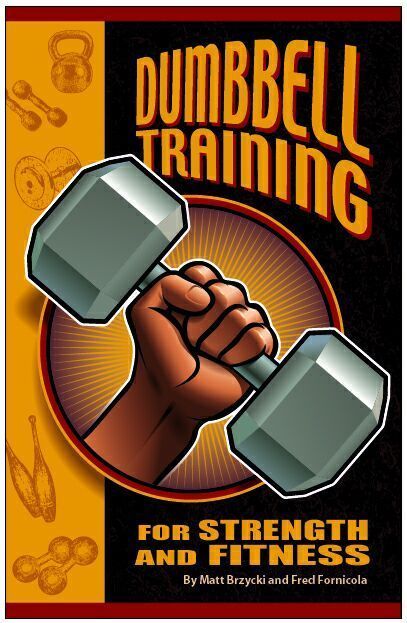
Just a quick update on Matt Brzycki's and my book "Dumbbell Training for Strength and Fitness".
First, Matt and I would like to thank all of those who purchased the book. Secondly, we are happy to announce that the book has been received very well - so much so that our distributor just told us that we are sold out (3,000 copies in 7 month's) so we OK'd a second printing to be done immediately.
For those interested in getting a copy, you can check your local Barnes and Noble or order from Amazon.com
If anyone wants a sneak peak you can visit my website, Premiere Personal Fitness.
Again, thank you very much for your support - it is greatly appreciated.
Fred Fornicola
Premiere Personal Fitness
Monday, January 15, 2007
Workout of the Week #2
We will be trying to post a "Workout of the Week" each week to share some of the programs we use for ourselves personally as well as for our trainees. Feel free to substitute exercises to your needs and/or availability so if an exercise calls for shoulder presses feel free to use a machine, dumbbells, barbell, sand bag, anvil, stone, whatever jazzes you. Repetition ranges are for example only. If you prefer higher reps, do them but regardless of the repetition range always try to exceed your goals and don't stop the set just because you achieved a number - keep going past your goal number if possible.
Db hammer curl
Db standing overhead press
Chin-up or layback row
Push-ups
Db lunges
Crunches
- Doug Scott, Strength Coach
Db hammer curl
Db standing overhead press
Chin-up or layback row
Push-ups
Db lunges
Crunches
- Doug Scott, Strength Coach
Thursday, January 11, 2007
What The Experts Say
I am always amazed when I am in a book store and see the amount of books written on “how to improve ones fitness.” Whether the book is written with the intent of making the reader a better athlete, as in the case of many strength training for sports books, or simply looking better as with the “look great in 8 weeks” books. In any case all of these books have two things is common. First off they all start with a standard release of liability; you know the line, “be sure you see a doctor before starting any exercise program.” In addition they all offer the hope that this book is the missing link in your quest for improved physical fitness. In Fact many guarantee success.
The first statement I won’t comment on since I also think everyone should receive a doctor’s clearance before starting an exercise program. The second comment however, I take issue with. Mainly because there are no guarantees in life and an exercise program is no different. In addition, there is no way the author, regardless of his/her credentials, can prescribe a detailed fitness plan for an individual they never met. Offer general guidelines, yes, but offer a detailed week by week workout plan is not possible. In fact many of these “guides” often leave the reader frustrated with exercise all together after the plan does not live up to claims.
The truth of the matter is many people turn to these books for guidance on how to better their lives through exercise. I think that’s great so many people what to become more physically fit. However, the answer is not in any book. Finding out what is best for you, in terms of exercise, can only be learned by doing. If you want to improve you fitness, than stop reading about a new routine and start moving with the routine you currently are on. If you want to read a book pick up a Gray’s Anatomy text and learn how the body functions and choose exercises accordingly. If your goal is become a stronger person than experiment with different exercises, set and rep combinations and notate which ones you like better, than strive to improve on each exercise. Improving your physical fitness is very simple, and you don’t need to read 300 page book to get the answer.
*Get doctor’s clearance
*Identify what you need to work on (muscular strength, cardiovascular endurance, flexibility etc.)
*Pick exercises you enjoy doing to address these needs
*Stay consistent with your plan for 3-5 days a week
*Be patient and stay the course.
- Doug Scott, Strength Coach
The first statement I won’t comment on since I also think everyone should receive a doctor’s clearance before starting an exercise program. The second comment however, I take issue with. Mainly because there are no guarantees in life and an exercise program is no different. In addition, there is no way the author, regardless of his/her credentials, can prescribe a detailed fitness plan for an individual they never met. Offer general guidelines, yes, but offer a detailed week by week workout plan is not possible. In fact many of these “guides” often leave the reader frustrated with exercise all together after the plan does not live up to claims.
The truth of the matter is many people turn to these books for guidance on how to better their lives through exercise. I think that’s great so many people what to become more physically fit. However, the answer is not in any book. Finding out what is best for you, in terms of exercise, can only be learned by doing. If you want to improve you fitness, than stop reading about a new routine and start moving with the routine you currently are on. If you want to read a book pick up a Gray’s Anatomy text and learn how the body functions and choose exercises accordingly. If your goal is become a stronger person than experiment with different exercises, set and rep combinations and notate which ones you like better, than strive to improve on each exercise. Improving your physical fitness is very simple, and you don’t need to read 300 page book to get the answer.
*Get doctor’s clearance
*Identify what you need to work on (muscular strength, cardiovascular endurance, flexibility etc.)
*Pick exercises you enjoy doing to address these needs
*Stay consistent with your plan for 3-5 days a week
*Be patient and stay the course.
- Doug Scott, Strength Coach
Tuesday, January 09, 2007
The HIGH PERFORMANCE TRAINING discussion board has been re-opened for intelligent discussions on safe, efficient and effective training for health and fitness.
Feel free to register. - Fred Fornicola
Feel free to register. - Fred Fornicola
Monday, January 08, 2007
Romancing the Stone
You may have seen these guys on TV before, you know those big behemoths (and I mean that in a good way fellas) known as Strongmen who pull trolley cars, lift those huge log bars over their heads, carry heavy implements in their hands (known as the farmers walk) and lift those huge stones. Well, you don't have to be that big or that strong to perform the exercises that they do but can definitely benefit from what those exercises provide as far as building strength and fitness.
Here's a perfect example of what I mean. I was looking to get a stone and Dr. Ken Leistner recommended I get in touch with a gentleman named Steve Slater of Slaters Hardware . Steve is a strongman competitor himself and was able very helpful in helping me decide which stone I should purchase. I ended up buying the lightest stone he made which weighed in at 39 pounds and 10" in diameter. I bought this particular stone so I and my clients could have even more diversity in our training, but more importantly I want to make sure that I can implement the use of this modality safely and effectively. I can see this stone being very addicting because it has so much versatility and is pretty challenging. This size stone is great to do deadlifts, (controlled) cleans to the shoulder, overhead pressing (1 arm or 2), hammer and regular curls along with stiff leg deadlifts, squats and other compound movements. Now the 39 pound ball is far from being a stones throw away (pun intended) from what these and other guys use for competition and recreation but it is still a very valuable tool and should be used more often to build strength and tax the cardiovascular system.
Here is a workout that involves only using the stone. Use 1 set of an all out effort with each exercise and take no longer than 60 seconds between movements.
Standing overhead press
Squat holding the stone at chest height
Stiff leg deadlift
Hammer curl
Stone lift to shoulder - alternating sides for each rep
This workout may take 15-20 minutes to complete. You will have worked every major muscle group in your body directly and indirectly and will certainly elevate your heart rate if you are giving 100 percent effort on each exercise and take little rest between movements. As time progresses I will try to update what new and exciting ways I have come up with to use the stone.
To reach Steve Slater email him at sslater1@columbus.rr.com
Here's a perfect example of what I mean. I was looking to get a stone and Dr. Ken Leistner recommended I get in touch with a gentleman named Steve Slater of Slaters Hardware . Steve is a strongman competitor himself and was able very helpful in helping me decide which stone I should purchase. I ended up buying the lightest stone he made which weighed in at 39 pounds and 10" in diameter. I bought this particular stone so I and my clients could have even more diversity in our training, but more importantly I want to make sure that I can implement the use of this modality safely and effectively. I can see this stone being very addicting because it has so much versatility and is pretty challenging. This size stone is great to do deadlifts, (controlled) cleans to the shoulder, overhead pressing (1 arm or 2), hammer and regular curls along with stiff leg deadlifts, squats and other compound movements. Now the 39 pound ball is far from being a stones throw away (pun intended) from what these and other guys use for competition and recreation but it is still a very valuable tool and should be used more often to build strength and tax the cardiovascular system.
Here is a workout that involves only using the stone. Use 1 set of an all out effort with each exercise and take no longer than 60 seconds between movements.
Standing overhead press
Squat holding the stone at chest height
Stiff leg deadlift
Hammer curl
Stone lift to shoulder - alternating sides for each rep
This workout may take 15-20 minutes to complete. You will have worked every major muscle group in your body directly and indirectly and will certainly elevate your heart rate if you are giving 100 percent effort on each exercise and take little rest between movements. As time progresses I will try to update what new and exciting ways I have come up with to use the stone.
To reach Steve Slater email him at sslater1@columbus.rr.com
Thursday, January 04, 2007
The Second "5 Hard & Fast Rules of Strength Training"
see the December 11, 2006 installment for the "First 5 Hard & Fast Rules"
6. Use a reasonable volume of training.
As mentioned in point number 4 above, there is no need to perform a high volume of exercises per session. This holds true for exercise sets. A 1 to 3 sets/exercise protocol is within reason and should be the guiding rule to create muscle overload. It’s effective, time-efficient, and also facilitates recovery because the body doesn’t have to deal with unnecessary stress bouts and energy depletion. Similarly, very intense training sessions require a few days to fully recover from, therefore two to three sessions per week should be the limit. If more people trained harder and took an extra day of recovery between these more intense sessions, there would be more muscle visible in the world.
7. Vary the number of repetitions.
Proper strength training should involve significant resistance to recruit and fatigue targeted muscle fibers. It is not advisable to perform hundreds of repetitions in an exercise set as the resistance needed for this would be too light and inadequate for creating muscle tension and overload. Because research is mixed on the exact number of repetitions needed for specific types of development (i.e., maximum strength, quick strength [explosion], increased muscle size, and extended force output [muscular endurance]), a wide range of repetitions can be used. A reasonable range of repetitions would be from four to twenty five, used systematically to enhance muscle capacity
over the course of individual training period segments and the training year.
8. Vary exercises and workout day formats.
Proper strength training can be a grind due to its stressful nature, therefore to add variety to training, rotate exercises between workouts and alter the workout day formats throughout the training year. Examples: leg presses for workout A, barbell or machine squats for workout B, and dead lifts for workout C. Wide grip pulldowns for the upper back on workout 1, chin ups on workout 2, and close grip pulldowns on workout 3. Train ten weeks doing total body on Monday, upper body on Thursday, and lower body on Friday. For the next 8 weeks, switch to a total body workout every fourth day. Bottom line: use a variety of exercises and training day formats, but maintain consistency and progression.
9. Use sensible nutritional intake.
The good ole days of recommending fresh fruits, vegetables, low-fat proteins, complex carbohydrates, and adequate hydration seem to have been be lost as there are a gazillion ergogenic aids and supplements are on the market. All are purported to enhance some elusive quality, namely increased muscle mass, strength, energy and/or leanness. They cost money, but so do trips to the local supermarket to obtain regular food products which we all have to do anyway. No one wants to hear this because it’s boring, but if a person eats sensibly – that is, eats balanced meals derived from the four food groups obtainable at the supermarket and gets enough calories to support whatever is desired (i.e., weight gain, loss, maintenance) -- that in itself should be sufficient to reach their goal.
10. Accept your body type and genetic limitations.
Last but not least is the genetic issue. I saved this for the end purposely as it is the greatest reality check of them all: you’re stuck with your body type and genetic endowment no matter how much you wish it could change. Thirty years ago I was ’-9”, weighed approximately 155 to 160 pounds, and could maybe do 185 pounds for 10 repetitions in the bench press before I started serious strength training. Fifteen years ago, I was 5’-9”, weighed approximately 193 to 197 pounds, and could do 225 pounds for 9 repetitions in the bench press due to hard, consistent, and progressive training. Currently, I’m 5’-9”, weigh approximately 185 to 190 pounds, and can do 225 pounds for 6 repetitions due to the fact I’m 47 years old and trying to hang on to continued consistent, progressive training. I hate to admit it, but I’m on the down- side. My shoulder bone/ligament structure isn’t going to change, I’m stuck with a 5’- 9” frame, but my body composition and strength levels can vary depending on how I
train. My point is you’re not going to make any major transformations in your
strength and physique once you make the initial commitment and tap into your genetic potential. The key is to accept what you have and train intelligently within its confines. - Tom Kelso, Strength Coach, SLU
6. Use a reasonable volume of training.
As mentioned in point number 4 above, there is no need to perform a high volume of exercises per session. This holds true for exercise sets. A 1 to 3 sets/exercise protocol is within reason and should be the guiding rule to create muscle overload. It’s effective, time-efficient, and also facilitates recovery because the body doesn’t have to deal with unnecessary stress bouts and energy depletion. Similarly, very intense training sessions require a few days to fully recover from, therefore two to three sessions per week should be the limit. If more people trained harder and took an extra day of recovery between these more intense sessions, there would be more muscle visible in the world.
7. Vary the number of repetitions.
Proper strength training should involve significant resistance to recruit and fatigue targeted muscle fibers. It is not advisable to perform hundreds of repetitions in an exercise set as the resistance needed for this would be too light and inadequate for creating muscle tension and overload. Because research is mixed on the exact number of repetitions needed for specific types of development (i.e., maximum strength, quick strength [explosion], increased muscle size, and extended force output [muscular endurance]), a wide range of repetitions can be used. A reasonable range of repetitions would be from four to twenty five, used systematically to enhance muscle capacity
over the course of individual training period segments and the training year.
8. Vary exercises and workout day formats.
Proper strength training can be a grind due to its stressful nature, therefore to add variety to training, rotate exercises between workouts and alter the workout day formats throughout the training year. Examples: leg presses for workout A, barbell or machine squats for workout B, and dead lifts for workout C. Wide grip pulldowns for the upper back on workout 1, chin ups on workout 2, and close grip pulldowns on workout 3. Train ten weeks doing total body on Monday, upper body on Thursday, and lower body on Friday. For the next 8 weeks, switch to a total body workout every fourth day. Bottom line: use a variety of exercises and training day formats, but maintain consistency and progression.
9. Use sensible nutritional intake.
The good ole days of recommending fresh fruits, vegetables, low-fat proteins, complex carbohydrates, and adequate hydration seem to have been be lost as there are a gazillion ergogenic aids and supplements are on the market. All are purported to enhance some elusive quality, namely increased muscle mass, strength, energy and/or leanness. They cost money, but so do trips to the local supermarket to obtain regular food products which we all have to do anyway. No one wants to hear this because it’s boring, but if a person eats sensibly – that is, eats balanced meals derived from the four food groups obtainable at the supermarket and gets enough calories to support whatever is desired (i.e., weight gain, loss, maintenance) -- that in itself should be sufficient to reach their goal.
10. Accept your body type and genetic limitations.
Last but not least is the genetic issue. I saved this for the end purposely as it is the greatest reality check of them all: you’re stuck with your body type and genetic endowment no matter how much you wish it could change. Thirty years ago I was ’-9”, weighed approximately 155 to 160 pounds, and could maybe do 185 pounds for 10 repetitions in the bench press before I started serious strength training. Fifteen years ago, I was 5’-9”, weighed approximately 193 to 197 pounds, and could do 225 pounds for 9 repetitions in the bench press due to hard, consistent, and progressive training. Currently, I’m 5’-9”, weigh approximately 185 to 190 pounds, and can do 225 pounds for 6 repetitions due to the fact I’m 47 years old and trying to hang on to continued consistent, progressive training. I hate to admit it, but I’m on the down- side. My shoulder bone/ligament structure isn’t going to change, I’m stuck with a 5’- 9” frame, but my body composition and strength levels can vary depending on how I
train. My point is you’re not going to make any major transformations in your
strength and physique once you make the initial commitment and tap into your genetic potential. The key is to accept what you have and train intelligently within its confines. - Tom Kelso, Strength Coach, SLU
Monday, January 01, 2007
Investment Strategy for a Healthier Lifestyle
How much is good health worth? How much would you pay to stay healthy? Would you do anything that would sacrifice you health? These are questions I ask my clients during our initial evaluation before we start training. Almost everyone has the same response, “my heath is a top priority” or “staying healthy is priceless”. Of course, most people would not do anything to intentionally sacrifice their physical health but many do due to the lack of exercise, which of course is not helping matters any.
Now here is where I start to get concerned. When I ask if staying healthy is so important, why has it been so long since you last exercised? The common responses are, “I don’t have enough time”, “work has been hectic lately”, “I mean to exercise but something else always seems to come up”. I’m not saying that commitments such as work, family and social obligations should be shunned; however taking the time to exercise is a great step in continuing to lead a healthy lifestyle. This is not anything new or revolutionary.
A majority of people would tend to agree that staying physically fit is extremely beneficial in promoting good health. The fitness boom of the seventies and eighties did a wonderful job of promoting and establishing the long-term benefits of leading an active lifestyle. The next hurdle we face as fitness enthusiasts is the public’s persona on how much time is needed to become and stay fit. Let’s face it, we live in a time-starved society, where “there never seems to be enough time to get anything done”. Walk around any office building and you will hear sayings like this all the time. Compound that with the exercise protocols that state, for improved health one has to perform cardiovascular exercise 3-5 days a week for 20-60 minutes in addition to strength training 2-3 times a week with multiple sets in order to keep the muscles and joints strong. If you were to add up all that fitness activity that is “required” to stay healthy, it would be between 3-5 hours a week or 100-200 hours a year! With that kind of time commitment required no wonder people can’t find the time to exercise. So, the common misconception is if an individual can’t commit to exercising at least 3 days a week for an hour than they can’t be fit. This is simply not true!
Studies, as well as personal application for myself and my clients, have shown that resistance training 3 times per week using one set to muscular fatigue will increase strength and cardiovascular benefits. This is certainly a step in the right direction, but for many 3 times a week is still a large time commitment. It was never stated or proven that 10-12 exercises performed 3 times a week was the “secret” to improving fitness, but working hard with a high level of intensity or effort is, so what if rather than 10 exercises to address the entire major muscle structures the volume was limited to only 5-7 total sets performed twice a week? Based on the overload principle, as long as the exercises are made progressively more challenging, then the body will adapt and become stronger, regardless of the volume. The exercise selection could be as follows:
Multi joint leg exercise (squat, leg press, deadlift, lunge)
Multi joint pushing exercise (chest press, overhead press, dips, push-ups),
Multi joint pulling movement (chin-ups, lat pulldown, seated row)
Round out the program with an abdominal and a lower back exercise and either grip/neck or calf work.
All exercises are done with a high level of intensity (until no more repetitions can be performed with good technique). The time between exercises should be minimized (20-40 seconds) so that the heart rate can stay elevated. This adjustment in volume and frequency will reduce the amount of time invested from 4 hours a week (208 hours a year with traditional guidelines) to 1 hour (or less) per week (roughly 52 hours a year). This reduction in the amount of time needed to become physically fit should have a great impact on how people view exercise and hopefully lead to another “fitness boom.” I am not saying this is THE best method of exercising for everyone; some may enjoy performing more activity and that’s fine; the main goal is realizing the benefits of maintaining an active lifestyle and making time to pursue it.
"Train With A Purpose"
www.premierepersonalfitness.com
Fred Fornicola
Now here is where I start to get concerned. When I ask if staying healthy is so important, why has it been so long since you last exercised? The common responses are, “I don’t have enough time”, “work has been hectic lately”, “I mean to exercise but something else always seems to come up”. I’m not saying that commitments such as work, family and social obligations should be shunned; however taking the time to exercise is a great step in continuing to lead a healthy lifestyle. This is not anything new or revolutionary.
A majority of people would tend to agree that staying physically fit is extremely beneficial in promoting good health. The fitness boom of the seventies and eighties did a wonderful job of promoting and establishing the long-term benefits of leading an active lifestyle. The next hurdle we face as fitness enthusiasts is the public’s persona on how much time is needed to become and stay fit. Let’s face it, we live in a time-starved society, where “there never seems to be enough time to get anything done”. Walk around any office building and you will hear sayings like this all the time. Compound that with the exercise protocols that state, for improved health one has to perform cardiovascular exercise 3-5 days a week for 20-60 minutes in addition to strength training 2-3 times a week with multiple sets in order to keep the muscles and joints strong. If you were to add up all that fitness activity that is “required” to stay healthy, it would be between 3-5 hours a week or 100-200 hours a year! With that kind of time commitment required no wonder people can’t find the time to exercise. So, the common misconception is if an individual can’t commit to exercising at least 3 days a week for an hour than they can’t be fit. This is simply not true!
Studies, as well as personal application for myself and my clients, have shown that resistance training 3 times per week using one set to muscular fatigue will increase strength and cardiovascular benefits. This is certainly a step in the right direction, but for many 3 times a week is still a large time commitment. It was never stated or proven that 10-12 exercises performed 3 times a week was the “secret” to improving fitness, but working hard with a high level of intensity or effort is, so what if rather than 10 exercises to address the entire major muscle structures the volume was limited to only 5-7 total sets performed twice a week? Based on the overload principle, as long as the exercises are made progressively more challenging, then the body will adapt and become stronger, regardless of the volume. The exercise selection could be as follows:
Multi joint leg exercise (squat, leg press, deadlift, lunge)
Multi joint pushing exercise (chest press, overhead press, dips, push-ups),
Multi joint pulling movement (chin-ups, lat pulldown, seated row)
Round out the program with an abdominal and a lower back exercise and either grip/neck or calf work.
All exercises are done with a high level of intensity (until no more repetitions can be performed with good technique). The time between exercises should be minimized (20-40 seconds) so that the heart rate can stay elevated. This adjustment in volume and frequency will reduce the amount of time invested from 4 hours a week (208 hours a year with traditional guidelines) to 1 hour (or less) per week (roughly 52 hours a year). This reduction in the amount of time needed to become physically fit should have a great impact on how people view exercise and hopefully lead to another “fitness boom.” I am not saying this is THE best method of exercising for everyone; some may enjoy performing more activity and that’s fine; the main goal is realizing the benefits of maintaining an active lifestyle and making time to pursue it.
"Train With A Purpose"
www.premierepersonalfitness.com
Fred Fornicola
Subscribe to:
Posts (Atom)