It’s a terrible thing that happened to Arielle Newman, the young track star who suddenly died back in April from absorbing lethal levels of methyl salicylate from using too much Ben Gay. When you hear something like this happening to someone, especially someone who is only 17 years of age, it stops you right in your tracks. But after hearing this terrible news, it made me think of why this young athlete died. One reporter on the news stated that Arielle was using this balm on a constant basis to alleviate sore muscles and sore joints. Sure, any hard-training athlete is going to experience muscle soreness, but a 17 year old having persistent joint pain? That sends up a red flag with me and that is what prompted this commentary.
Even if the fact of her persistent joint pain is over-stated, how did this daily “need” for muscular relief go unrecognized by her coach, parents or even herself? Maybe she just thought it would aid in recovery or this is what she had to do to help her in achieving her goals, who knows, but what we do know is that soreness – muscular or joint - on a steady basis is not a healthy nor desirable scenario for any athlete at any age and these issues extend beyond topical ointments.
A lot of today’s young athletes are self-driven, others seem to have competition thrust upon them by their parents who were athletes themselves or who want to make up for their failed athletic youth by living vicariously through their children. And some kids unfortunately are “miss coached” by some well-meaning authorities who lack constructive knowledge or experience and impose unruly demands on their athletes by applying unsafe training methods. Whoever is to blame is not the gist of the matter at this time, it is the fact that there needs to be an awareness brought to everyone that there is potential for dangerous outcomes to young athletes who are subjected to this “pedal-to-the-metal” philosophy to improve performance.
What parent doesn’t want to see their kid be the best that they can, but as a parent your first and foremost responsibility is to protect your child. As a coach, you have the responsibility of nurturing these young adults for the four years, but what happens to them under your supervision can affect them for a lifetime. And as an athlete, you have to know what you want and go after it, striving to be the best is fine, that is what builds champions on and off the athletic field, but recognize that success can come with a price that just isn’t worth paying some time.
- Fred Fornicola
Monday, June 25, 2007
Friday, June 15, 2007
Repetition Ranges
There is a terrible misconception that repetition ranges somehow have a special affect on your body. Some believe that you need 8-12 reps for hypertrophy (muscle growth) and 5-6 reps are just for building strength while anything over 15 reps only builds endurance. Well, I think that is totally ridiculous. If you can perform 50 reps with 200 pounds in the leg press and after some time you now can do 50 reps with 210 pounds then you have gotten stronger, built more endurance and could possibly have increased your muscular size - period.
Varying repetition ranges (that is if you want to mix it up and your body can handle the varying loads placed on it) can keep the body "off guard" and help prevent becoming stale, bored or plateaued. By using a varied range, you may find certain repetition ranges to be more suitable for different body parts or a particular movement and you can then set new goals for personal records.
Personally, I feel a higher than normal repetition range is safer for most individuals - beginners or the most advanced because it allows for lighter loads to be used so there are less compressive forces. But don't think lighter means easier - no, far from it. If these sets are worked hard (which they should be) then these high rep sets can be very challenging, enabling the trainee to build good strength and stamina with less joint stress. - Fred Fornicola
Varying repetition ranges (that is if you want to mix it up and your body can handle the varying loads placed on it) can keep the body "off guard" and help prevent becoming stale, bored or plateaued. By using a varied range, you may find certain repetition ranges to be more suitable for different body parts or a particular movement and you can then set new goals for personal records.
Personally, I feel a higher than normal repetition range is safer for most individuals - beginners or the most advanced because it allows for lighter loads to be used so there are less compressive forces. But don't think lighter means easier - no, far from it. If these sets are worked hard (which they should be) then these high rep sets can be very challenging, enabling the trainee to build good strength and stamina with less joint stress. - Fred Fornicola


Thursday, June 07, 2007
Something Overlooked?
For those of you who are (uhmm, slightly older) and may have some type of prevailing injury (which is not exclusive to us old timers) - I believe that some alterations may be in order. Allow me to explain....The die hard high intensity trainee can at times be confused or made to feel "guilty" if they do submaximum effort workouts or multiple sets or perform an exercise that is categorized as - "uncontrolled". I have found through my adventures that higher repetition work is hard and beneficial along with select exercises - allowing me to train consistantly with reduced problematic symptoms - i.e. pain and discomfort. Since my goal is health and overall fitness (and yes I want to look good too so this is in no way shape or form a compromise - my "stats" prove otherwise) I have to make more intelligent choices based on what my goals are therefore not always training to utter failure is part of my plan of action. I follow no schedule of practice but work on how I feel - yes I am an instict type trainee and trainer - I feel that works best for me and the people I train. Although 90% of my workouts revolve around 1 good, hard set of a handful of exercises, I do at times perform submaximal effort multiple sets. This can be done for a general overall workout to induce a good amount of volume that doesn't put me on the floor but does elevate my heart rate and IMO stimulates muscle. Not all work has to be overload to be progressive - meaning sometimes one step back allows for two steps forward.I also believe and practice "other" type exercises that are done for multiple sets as a therapeutic means to achieve my goal - i.e. HEALTH (defined as a strong musculature, cardiovascular system, immune system, mind, spirit, etc.). My point here is that as high intensity "purests" if you will we have to continue to ask ourselves if what we are doing is serving our purpose, our goals that have been established and we must not be guided or guilted or persuaded into making decisions that do not directly help us step closer to our goals. If we do - we compromise ourselves and then defeat our purpose in the long run. - Fred Fornicola
Sunday, April 15, 2007
What Should I Do With My Training?
People often ask me what they should do with their training, be it cardio or strength. I used to give them advice about what to do and why, but soon realized that they didn't understand or just didn't want to do what I said anyway. So now I answer the question with a question, "what do you like to do?". Then I say to use that and work at it, become better at what ever it is and they will see the results that they want. I've found that this works better for both parties and I will make a suggestion here and there if they are doing something which might be detrimental to them in the long run. The beautiful thing about exercise is there is no right or wrong. Any thing can be successful if done properly and safely. The worst thing to happen to the fitness industry is that it became an industry at all. Its all about what you like and feel good doing and anyone who says differently is just trying to sell you something - and usually for a ridiculous price. Stick to what you like, do it properly, safely and progress with it and you will be amazed at what can happen. - Tim Clifford, Personal Trainer
Sunday, April 08, 2007
Extra Conditioning
Due to time restraints I don't do as much cardio/conditioning work as I would like. Notice I said "as I would like" – not what I HAVE to do. I think that hard, intense training done consistently will help almost any need for cardio but I feel different "cardio expressions" have a skill component just like anything else. For instance, train hard in traditional high intensity manner and then go out and run 10 hard sprints. The sprints will kick your butt. Why? Not because your "cardio" isn't good, it's because you’re not used to the activity. Start running sprints for awhile and you'll get good at them. Anything you start new that is physically challenging will kick your butt at first until you get used to it. Don't believe it? Train hard for a month, get used to that workout so that you can go nonstop through it for 20-45 minutes. OK, so now you feel you’re in pretty good shape! Now grab a surf board and paddle out into the surf when it's running good. Do that nonstop for an hour if you can. It will wipe you out UNTIL you get used to it or build the skill. Do I need extra cardio? I don't know? But................ I do need the extra activity outside the gym. I feel that recreation is an important component of overall fitness. – Jim Bryan, Strength Coach
Monday, April 02, 2007
Old School
There is no doubt that today’s trainee will make his way to the local supplement store to try the “latest and greatest” so he can become lean and mean and reach his ultimate potential in muscular gains and strength (see how buzz words sell), but beyond all of that nonsense is the infusion of devices that are down right dangerous and being played off as providing the ultimate in tools for physical fitness. It seems as though gadgets and gismos have actually infiltrated people who claim to be serious about training. I’m not just talking about the countless number of impulsive purchases made by some overweight, out of shape individual who is watching a Saturday morning infomercial with coffee and donut in hand, but experienced institutions and training facilities who are implementing whosi-whats-its and thing-a-ma-bobs to improve ones core-balance-functional-plyo-strength, or whatever the buzz word or term is this week because it is deemed as “the cutting edge” in fitness.
I’m sorry, but I can’t see where standing on a half-sphere trying to balance yourself with weights overhead is a productive means at developing anything other than an injury. I once walked into a personal training studio where I saw a woman on one of these balls with a bar on her back trying to do squats. My initial thought was, well, one of utter amazement and then after rubbing my eyes to make sure I saw what I saw, I just figured she was there to see how long it would take her to tear the cartilage in her knee or ankle. I’m not negating that some of the newer products can be used as effective tools but the concepts used to support most of these products is, well, down right ridiculous and propagated by hype. I’m all for improvement but why is it that people (for reasons other than money) constantly need to impose the concept of “building a better mouse trap” when the original works just fine.
Things like this make absolutely no sense to me when I consider that
the focus on an athlete or trainee should be on improving their strength and becoming less prone to injury while working hard at improving their sport or hobby.
Yeah, sure there were items back in the old days that were touted as being the new way to a leaner body and bigger muscles and plenty of “snake oil” salesman who promised that their new elixir would do wonders for your health, but the “takers” were usually those who weren’t doing anything for themselves physically and just wanted a quick fix. You expect that kind of behavior from inexperienced individuals or those who are half-heartedly going about a fitness program, but I for one have a major problem with those who run out and start implementing the latest toy without intelligently and methodically thinking about the pros and cons of using such devices, especially with their trainees.
I recently did an all day seminar at a local middle school on the importance of having a properly planned exercise program and we talked about nutrition, overall health, etc. A few of the kids came up to me after the class and asked how they could improve their jumping or running or whatever their sport was and I simply advised them to have a qualified individual supervise their strength program and to work hard at what they wanted to improve on. I explained to one student that if he wants to improve his ability to jump higher, then he needs to learn how to jump properly and practice his jumping. If you want to improve your baseball swing, work with a qualified individual to learn the fundamentals and practice hitting baseballs. Most of you are probably thinking that that is pretty simple and basic advice and you know what, you are right. What’s wrong with a simple, basic approach anyway? Why does everything need to be complex to be effective? The simple and basic answer is - it doesn’t.
Over the past few years working out and trying to lead a healthy lifestyle has become more and more complicated for people and it doesn’t have to be that way. Work at implementing an overall fitness program consisting of strength training, cardiovascular conditioning, flexibility training, proper nutrition, adequate rest and close attention to the sport or activity you are trying to improve.
Like the title says, it’s pretty much Old School. - Fred Fornicola
I’m sorry, but I can’t see where standing on a half-sphere trying to balance yourself with weights overhead is a productive means at developing anything other than an injury. I once walked into a personal training studio where I saw a woman on one of these balls with a bar on her back trying to do squats. My initial thought was, well, one of utter amazement and then after rubbing my eyes to make sure I saw what I saw, I just figured she was there to see how long it would take her to tear the cartilage in her knee or ankle. I’m not negating that some of the newer products can be used as effective tools but the concepts used to support most of these products is, well, down right ridiculous and propagated by hype. I’m all for improvement but why is it that people (for reasons other than money) constantly need to impose the concept of “building a better mouse trap” when the original works just fine.
Things like this make absolutely no sense to me when I consider that
the focus on an athlete or trainee should be on improving their strength and becoming less prone to injury while working hard at improving their sport or hobby.
Yeah, sure there were items back in the old days that were touted as being the new way to a leaner body and bigger muscles and plenty of “snake oil” salesman who promised that their new elixir would do wonders for your health, but the “takers” were usually those who weren’t doing anything for themselves physically and just wanted a quick fix. You expect that kind of behavior from inexperienced individuals or those who are half-heartedly going about a fitness program, but I for one have a major problem with those who run out and start implementing the latest toy without intelligently and methodically thinking about the pros and cons of using such devices, especially with their trainees.
I recently did an all day seminar at a local middle school on the importance of having a properly planned exercise program and we talked about nutrition, overall health, etc. A few of the kids came up to me after the class and asked how they could improve their jumping or running or whatever their sport was and I simply advised them to have a qualified individual supervise their strength program and to work hard at what they wanted to improve on. I explained to one student that if he wants to improve his ability to jump higher, then he needs to learn how to jump properly and practice his jumping. If you want to improve your baseball swing, work with a qualified individual to learn the fundamentals and practice hitting baseballs. Most of you are probably thinking that that is pretty simple and basic advice and you know what, you are right. What’s wrong with a simple, basic approach anyway? Why does everything need to be complex to be effective? The simple and basic answer is - it doesn’t.
Over the past few years working out and trying to lead a healthy lifestyle has become more and more complicated for people and it doesn’t have to be that way. Work at implementing an overall fitness program consisting of strength training, cardiovascular conditioning, flexibility training, proper nutrition, adequate rest and close attention to the sport or activity you are trying to improve.
Like the title says, it’s pretty much Old School. - Fred Fornicola
Monday, March 26, 2007
Personal Preference
Whether you are scientific about training, fly by the seat of your pants or anywhere in between, you can't help but bring your personal preferences in to your training. Over the many years I have had the privilege of speaking with several (and I mean several) of what I would call "well versed" strength coaches/trainers and a common factor that I've noticed is that a lot of them believe in certain things based on their personal likes and dislikes.
For instance, you may read where a strength coach will recommend training 2x per week and advocate 20 rep squats. Why? First and foremost, if worked hard it can be productive but secondly, a lot of personal preference goes into that program. You may see another coach recommend the bench press and have a program based around it and then another coach emphasize the overhead press. Again, more than likely the bench press coach likes the BP and will incorporate it into their program because they feel there is value. Another example is a coach recommending 3x per week training instead of 2 or a person who suggests additional CV work and then another who recommends none.
My point here is this - a lot of what we read (and sometimes write) is based on what the individual finds to be of value to THEM and then passes it along as value to others. Nothing inherently wrong with doing that but it is up to the reader (and the writer) to not read (or speak) as what is written to be gospel and to understand and entertain that which is proposed and embark on the journey themselves. - Fred Fornicola
For instance, you may read where a strength coach will recommend training 2x per week and advocate 20 rep squats. Why? First and foremost, if worked hard it can be productive but secondly, a lot of personal preference goes into that program. You may see another coach recommend the bench press and have a program based around it and then another coach emphasize the overhead press. Again, more than likely the bench press coach likes the BP and will incorporate it into their program because they feel there is value. Another example is a coach recommending 3x per week training instead of 2 or a person who suggests additional CV work and then another who recommends none.
My point here is this - a lot of what we read (and sometimes write) is based on what the individual finds to be of value to THEM and then passes it along as value to others. Nothing inherently wrong with doing that but it is up to the reader (and the writer) to not read (or speak) as what is written to be gospel and to understand and entertain that which is proposed and embark on the journey themselves. - Fred Fornicola
Sunday, March 18, 2007
A New Way To Work Out?
For many years I ran and did bodyweight exercises, because I didn't like weights and believed they would make you slow, bulky, etc,.. I used what I learned in the marine corps, which included push ups, pull ups, squat thrusts, etc. I even did some rope climbing and wrestlers bridges I learned in high school. I did these things when I got a sedentary job after years of physical work. I still use bw exercises and like them.NOW, all this stuff is being presented as if it's been some big secret kept from the public! Really? I had no idea I was so avant garde! The truth is, a lot of people buy into this boot camp stuff for the same reason they buy into Pilates or whatever. They think it will make them look substantially different than they do, in some relatively easy fashion. And there is a certain "tough guy" glamour that appeals to some people. I have seen ads about "blow-torching off fat", like if you do a hard set of bw squats or swing your kettlebell you'll suddenly drop tons of flab. Forget about diet. Forget about how you have to really work hard consistently.I'm waiting for some of these folks to pay some big guy in a uniform to kick sand in ther faces and scream at them about being "pukes and quitters who ain't packing the gear"... I'm hoping the next big craze is "manual labor fitness" so I can get some of these unfortunates to put in my new rock garden and deck. This too, will pass. - Regards,Griff
Sunday, March 11, 2007
Lower Body Strength from Running
It is true that you can only get stronger to a point, but that is the limiting factor with all exercise modalities - strength training included Regardless of the choosen exercise squats, leg press, or running leg strength will only be developed up to specific point based on many factors. Some of which are body leverages, ranges of motion, and genetic limitations as to how fast or how much one can lift or run. IMO being able to overload is not a factor with any activity. Since any modality can be made systamatically more challenging.
If overload really is making the body or muscle area perform more work than currently capable than the following are ways to overload a running workout.
1. progress in speed (jog to run)
2. progress in distance relative to time
3 perform intervals or spriniting activities / add more intervals
4. reduce the rest period of said intervals
5 run hills / same procedures are intervals
6. perform a distance course with hill intervals - if course has hills
7. change the running surface. grass is more challenging than the road - beach sand is probably the most challenging.
8. perform other running activities as intervals ( bear crawls, crab walks, side shuffle, backwards running) (side note bear crawls on beach sand is a killer)
9. Add bodyweight squats or lunges at periods of a long run. every 5 minutes perform 50 squats.
10. perform sprints with push-up intervals. If you think push-ups don't work your hips perform them after sprints.
I just think that all the above are ways of having the lower body perform more work than it's currently able. therefore making it stronger!
Just a thought since most commerical gyms don't have much in the way of lower body exercises, especially if you can't squat or deadlift. Just food for thought. - Doug Scott, Strength Coach
If overload really is making the body or muscle area perform more work than currently capable than the following are ways to overload a running workout.
1. progress in speed (jog to run)
2. progress in distance relative to time
3 perform intervals or spriniting activities / add more intervals
4. reduce the rest period of said intervals
5 run hills / same procedures are intervals
6. perform a distance course with hill intervals - if course has hills
7. change the running surface. grass is more challenging than the road - beach sand is probably the most challenging.
8. perform other running activities as intervals ( bear crawls, crab walks, side shuffle, backwards running) (side note bear crawls on beach sand is a killer)
9. Add bodyweight squats or lunges at periods of a long run. every 5 minutes perform 50 squats.
10. perform sprints with push-up intervals. If you think push-ups don't work your hips perform them after sprints.
I just think that all the above are ways of having the lower body perform more work than it's currently able. therefore making it stronger!
Just a thought since most commerical gyms don't have much in the way of lower body exercises, especially if you can't squat or deadlift. Just food for thought. - Doug Scott, Strength Coach
Monday, March 05, 2007
Exercise for the Average Person
As a non-athlete, non-bodybuilding home trainer, I found the following quote to be very interesting. For the last few months I have been following a similar bodyweight routine of chins, dips, body rows, pushups and squats. I do one set to failure on each exercise & train 2 days per week. If the weather is good, I will walk a couple of days per week also. I have found this type of workout to be perfect for the needs of average people that are not interested in sports performance or "bodybuilding", but simply need to increase their "functional ability" for everyday life (mowing the lawn, carrying groceries up the stairs, moving some furniture, etc). In August, I will begin my 48th trip around the sun. I no longer have the time, nor the desire, to try to look like a bodybuilder or male fitness model. I'm just trying to stay in shape for living. When I compare myself to my peer group & not 25 year olds, I feel that I stack up pretty well. – Jay Setser
Tuesday, February 27, 2007
Raising Your Heart Rate
I think an elevated HR due to lifting heavy weights is different than that of running or other activities. An elevated HR response can be caused by a number of things outside of the "exercise your heart model" - if you will. Body positioning has a lot to do with heart rate responses. If you’re performing a set of leg presses, the position of the body - knees tucked into chest - will cause the heat rate to elevate. If you are performing presses flat on your back your heart rate will be lower than if you were pressing standing up- even if the relative intensity is the same. Holding a heavy weight causes an increase in blood pressure with leads to an increased heart rate - just by the nature of the activity. During times or excitement or great stress the heart rate is also elevated because of the release of various hormones - not related to exercising the heart.
I think that heart rate is very specific and is only on factor when determining the effect on improving the fitness of the CV system. The other is oxygen consumption. This is where the term VO2 max stems from - heart rate has always been used because it is easier to monitor in the field. O2 consumption is done in the labs. During traditional modes of CV activity - running-biking- etc. (all but swimming) - the heart rate is elevated in proportion to oxygen consumption - do to the need to transfer oxygen and nutrients to working muscles. So if your heart rate is raised to 150 BPM than Oxygen consumption would also be raised. However, if the HR is elevated because of a specific body position than the oxygen consumption might not be as high. Therefore causing no improvement in CV fitness.
There is no doubt that HIT raises both heart rate and respiration - breathing heavy. I just don't know if it is enough to improve ones fitness without additional CV training. - Doug Scott
I think that heart rate is very specific and is only on factor when determining the effect on improving the fitness of the CV system. The other is oxygen consumption. This is where the term VO2 max stems from - heart rate has always been used because it is easier to monitor in the field. O2 consumption is done in the labs. During traditional modes of CV activity - running-biking- etc. (all but swimming) - the heart rate is elevated in proportion to oxygen consumption - do to the need to transfer oxygen and nutrients to working muscles. So if your heart rate is raised to 150 BPM than Oxygen consumption would also be raised. However, if the HR is elevated because of a specific body position than the oxygen consumption might not be as high. Therefore causing no improvement in CV fitness.
There is no doubt that HIT raises both heart rate and respiration - breathing heavy. I just don't know if it is enough to improve ones fitness without additional CV training. - Doug Scott
Tuesday, February 20, 2007
Daily Activity
I am a big fan of daily exercise in some capacity. whether it be in the form of steady state cardio or high intensity strength training. I feel the body is meant to move and needs to exercised on a regular basis. Anyway here is a workout that I have been playing around with on my non lifting days.
at the local track - but it can be done anywhere.
jog a lap
push-ups ( not to failure or even close)
jog a lap
crunches ( not to failure)
jog a lap
body weight squats ( about a minutes worth)
jog a lap
stretch and cool down
for me this workouts out to about 15-25 minutes of activity and serves to get the "lead out" after a tough workout the day before. - Doug Scott, Strength Coach
at the local track - but it can be done anywhere.
jog a lap
push-ups ( not to failure or even close)
jog a lap
crunches ( not to failure)
jog a lap
body weight squats ( about a minutes worth)
jog a lap
stretch and cool down
for me this workouts out to about 15-25 minutes of activity and serves to get the "lead out" after a tough workout the day before. - Doug Scott, Strength Coach
Tuesday, February 13, 2007
An Under Rated Exercise
I think the pushup is one of the better exercises available for building strength not only in the chest, shoulder and triceps but in the stabilizing muscles such as the upper back, mid section (both abdominal and lower back) and the hip/leg area. For some odd reason, it is often overlooked. Maybe because it isn't high tech or complex enough or maybe it's under valued because a lot of people don't truly understand its worth.
It takes more than just upper body strength to perform a pushup and it can be quite challenging -especially at the end of a workout when the body is tired. A properly performed pushup involves the entire musculature and when incorporated in a strength - body building program it can provide tremendous results. I mean, c'mon, how hard is it to pop of some pushups a couple of days a week, right? – Fred Fornicola
It takes more than just upper body strength to perform a pushup and it can be quite challenging -especially at the end of a workout when the body is tired. A properly performed pushup involves the entire musculature and when incorporated in a strength - body building program it can provide tremendous results. I mean, c'mon, how hard is it to pop of some pushups a couple of days a week, right? – Fred Fornicola
Tuesday, February 06, 2007
Something Old, Something New
Everyone is always looking for something new and improved to add to their fitness routine in order to spark new interest or get over a training plateau. Often times we look for some never before seen exercise, outlandish routine sequence, or new age exercise machine or gadget. However, sometimes something old can be something very new as in the case of one of my recent workouts. Not to long ago I purchased an Atlas Stone, a 40 lbs 10 inches in diameter, stone ball. This exercise devise could quite possibly be one of the oldest forms resistance training. I mean there is nothing new about picking up a “rock” and lifting it in various directions. However, the muscle stimulation is something that must be felt to truly understand. Lifting an odd shaped object forces the body to compensate and use muscles, especially the midsection and upper back, to stabilize the torso in a non-traditional manner. Simple exercises like, overhead press, curls, squats, rows, deadlifts, push-ups really force the body to work hard, which is what training is all about – right! Add to that some more complex or combination lifts and the heart and lungs will really get a workout as well. For example, squat/ press, or power cleans to shoulders, or even the arm curl and press combo will have you feeling the effects similar to any interval workout imaginable. So to get new results out of your training turn to something old and give odd lifting a try. Whether an Atlas stone, sand bag, or drift wood from the beach have fun and get moving. - Doug Scott, Strength Coach
To purchase a stone, contact Steve Slater
To purchase a stone, contact Steve Slater
Friday, February 02, 2007
What Motivates You?
I would have to surmise that those involved in fitness have basically the same goals – staying fit, good health, feeling good – a quality of life that allows us to do what we want physically. These are all goals well worth the effort we expend. Now, I haven’t been pursuing this life style as many years as most, but feel fortunate to have met the right people to help me. Fred Fornicola is one of them who continues to work with me on an ongoing basis. When I drift from my focus of my workouts Fred will always re-center me with the question, “Why are you here and what are you trying to achieve?” Of course, I find myself going back to the important, and correct, answer of “good health”. Fred recently recommended I see a nutritionist to help with my diet and fueling for my cycling activities. In seeing this professional, again I was presented with the questions of what are my goals.
This brings me to the subject of this post. As I thought about what my goals are I realized, at least in my experience, there are different goals. Of course, I listed the obvious of good health. But as I wrote it out I knew, while it was the global goal, it wasn’t the goal that motivated me. When I’m trying to get one more rep and my body is screaming the thought of good health isn’t what makes me push the weight. When I’m in my weekly cycling training session and my heart rate is 172 beats per minute and my legs are burning, good health isn’t what inspires me to push one more gear for the final minute. What gets me to push is the visualization of not getting dropped by a peloton of good cyclists, or being the first one to crest a hill, or winning the final sprint after a 75 mile ride. Do I accomplish all these goals, of course not, but it’s what makes me push for that final rep. So is good health my goal – absolutely. But I have to admit it’s my ego that motivates me.
Competitive edges, prevent injury, mental discipline, staying in shape, pushing the envelope, the challenge – all great motivators but “because I can – where others can’t or won’t.” is an answer I use when someone who is inquiring about my cycling activities will ask why I choose to ride a century (100 miles) or some other physical activity that’s foreign to them. “Because I can” really says it all.
So, I’m curious, what motivates you to push that last rep or to sprint those last 50 yards? - Bob Vale, Fitness Enthusiast
This brings me to the subject of this post. As I thought about what my goals are I realized, at least in my experience, there are different goals. Of course, I listed the obvious of good health. But as I wrote it out I knew, while it was the global goal, it wasn’t the goal that motivated me. When I’m trying to get one more rep and my body is screaming the thought of good health isn’t what makes me push the weight. When I’m in my weekly cycling training session and my heart rate is 172 beats per minute and my legs are burning, good health isn’t what inspires me to push one more gear for the final minute. What gets me to push is the visualization of not getting dropped by a peloton of good cyclists, or being the first one to crest a hill, or winning the final sprint after a 75 mile ride. Do I accomplish all these goals, of course not, but it’s what makes me push for that final rep. So is good health my goal – absolutely. But I have to admit it’s my ego that motivates me.
Competitive edges, prevent injury, mental discipline, staying in shape, pushing the envelope, the challenge – all great motivators but “because I can – where others can’t or won’t.” is an answer I use when someone who is inquiring about my cycling activities will ask why I choose to ride a century (100 miles) or some other physical activity that’s foreign to them. “Because I can” really says it all.
So, I’m curious, what motivates you to push that last rep or to sprint those last 50 yards? - Bob Vale, Fitness Enthusiast
Tuesday, January 30, 2007
My Fat Loss Adventure
I've never been one to attempt to lose weight until recently. It was all about lifting hard, eating, and attempting to gain weight. At 48, I now realize I am not immune to accumulating body fat like any other human being. I'm not as active as in the past, I eat when I'm hungry, and have strayed from a sensible diet to one that consists of many "zero nutritional value" foods (i.e., processed, white flour, high fructose corn syrup, saturated fat, etc.). I do eat some fruits, vegetables, and lean sources of protein, but it was the increase of the aforementioned foods that lead to my "mini-gut." Bottom line: I slowly developed that gut that started getting in the way of putting my socks on in the morning.
Since early December, my scale weight has dropped from 194 to 182. And when I do the pinch test, it's definitely decreased. Here's what I have done and my experiences in the last 5 weeks:
1. I'm eating fewer calories, smaller portions, and making better choices (i.e., carrot sticks over Rice Krispie Treat).
2. Limited intake of white flour products and processed food. A chicken breast and mixed vegetables is it. Before it was that plus non-whole grain pasta and sauce.
3. Water over soda. I've always been a skim milk guy, too.
4. When I get hungry between meals, I fight the urge to eat. I have to tap into that chunk on my stomach.
5. When it is time for one of the three traditional meals of the day (B-L-D), eat, but don't over-eat.
6. No late-night feeding sessions (nothing after 8:00 p.m.)
7. NO CARDIO!! Not that I'm against it, just that I can't run (knee) and loathe standing on treadmill or elliptical trainer. Lesson: you don't have to go on a 45 minute run or 1 hour stationary bike ride to lose fat. Lift in circuit style if you want to huff and puff and get the heart rate up.
8. I have been strength training every other day, six days/week, alternating between upper and lower body. Muscle is metabolically expensive and "wants to go" in the wake of reduced calories, so I attempt to keep it there. However...
9. Interestingly, I have lost some strength in the process. It's due to a combination of my lower calorie intake and being under-recovered due to my lifting frequency (I'll experiment with a normal lifting frequency {2-3 days/week} as time moves forward but right now I want to "be active" more often since I'm not doing the cardio). It's a double edged sword: want to get bigger and stronger? Eat more and lift hard. Want to lose weight? Eat less and exercise more. – Tom Kelso, Strength Coach
Since early December, my scale weight has dropped from 194 to 182. And when I do the pinch test, it's definitely decreased. Here's what I have done and my experiences in the last 5 weeks:
1. I'm eating fewer calories, smaller portions, and making better choices (i.e., carrot sticks over Rice Krispie Treat).
2. Limited intake of white flour products and processed food. A chicken breast and mixed vegetables is it. Before it was that plus non-whole grain pasta and sauce.
3. Water over soda. I've always been a skim milk guy, too.
4. When I get hungry between meals, I fight the urge to eat. I have to tap into that chunk on my stomach.
5. When it is time for one of the three traditional meals of the day (B-L-D), eat, but don't over-eat.
6. No late-night feeding sessions (nothing after 8:00 p.m.)
7. NO CARDIO!! Not that I'm against it, just that I can't run (knee) and loathe standing on treadmill or elliptical trainer. Lesson: you don't have to go on a 45 minute run or 1 hour stationary bike ride to lose fat. Lift in circuit style if you want to huff and puff and get the heart rate up.
8. I have been strength training every other day, six days/week, alternating between upper and lower body. Muscle is metabolically expensive and "wants to go" in the wake of reduced calories, so I attempt to keep it there. However...
9. Interestingly, I have lost some strength in the process. It's due to a combination of my lower calorie intake and being under-recovered due to my lifting frequency (I'll experiment with a normal lifting frequency {2-3 days/week} as time moves forward but right now I want to "be active" more often since I'm not doing the cardio). It's a double edged sword: want to get bigger and stronger? Eat more and lift hard. Want to lose weight? Eat less and exercise more. – Tom Kelso, Strength Coach
Thursday, January 25, 2007
Consistency of Exercise
Often we talk about the importance of staying consist with an exercise plan in order to make it as effective as possible. For the most part, that is true. One must exercise on a routine basis, 2-3 times each week, in order to receive a desirable level of fitness. An important point that is commonly overlooked is the importance of staying consistent with the exercises within an exercise program. Too many times the exerciser changes exercise modalities and never receive the maximum benefit from any one movement. A common example could be: during workout one the individual performs the bench press, to strengthen the muscles of the chest and shoulders, the next workout the push-ups is performed, the following workout the bodyweight dip is performed and the forth workout the dumbbell bench press is used. For the most part all of these exercises stimulate the same body area and therefore are equally effective for developing strength and stamina; however, each one has a unique learning curve which must be acquired before optimum muscular strength gains occur. What I mean by that is each exercise has a specific technique which must be learned and mastered before meaningful resistance can be used, and strength levels increased. As a general rule this takes about 8-10 workouts to occur. During this time you will notice a gradual increase in repetitions performed and weight lifted, this is mostly due to the brain and nervous system becoming efficient at the movement.
Now, a common issue among many fitness enthusiasts is the fact that boredom sets in very quickly when a workout is performed over and over for a period of time. I agree workouts should provide a variety of stimulus while still challenging the body. What I recommend in this case is to choose 10 exercises that address the entire body, lets say: leg press, db chest press, machine lat pulldown, barbell overhead press, barbell curl, leg curl, ab crunch, low back extension, db lateral raise, wrist flexion. For the next 10 workouts you will perform these 10 exercises in the same fashion each time. Change the order of exercises each time; make it as varied as you wish but work hard on all exercises.
What will happen is since the exercises themselves are not changing the brain and nervous system will adapt to the technique or the exercise and become efficient at the movement; however, the overall stress on the body will be ever changing as well as provide a great deal of variety. - Doug Scott, Strength Coach
Now, a common issue among many fitness enthusiasts is the fact that boredom sets in very quickly when a workout is performed over and over for a period of time. I agree workouts should provide a variety of stimulus while still challenging the body. What I recommend in this case is to choose 10 exercises that address the entire body, lets say: leg press, db chest press, machine lat pulldown, barbell overhead press, barbell curl, leg curl, ab crunch, low back extension, db lateral raise, wrist flexion. For the next 10 workouts you will perform these 10 exercises in the same fashion each time. Change the order of exercises each time; make it as varied as you wish but work hard on all exercises.
What will happen is since the exercises themselves are not changing the brain and nervous system will adapt to the technique or the exercise and become efficient at the movement; however, the overall stress on the body will be ever changing as well as provide a great deal of variety. - Doug Scott, Strength Coach
Monday, January 22, 2007
A Breath of Fresh Air
About 2 weeks ago I took a long walk with my dog through a local park and I was glad to see there was a lot of activity going on. This was in part due to the mild temperatures we've been experiencing here on the east coast. People were out jogging, roller blading, power walking and kids were just running around, you could feel the energy from all the activity.
Well, it's finally starting to get a little colder and this is the time of year when people fall in to their sedentary state - a hibernation of sorts. They get a bit lazy and find excuses for blowing off exercise, they become less motivated, usually because they can hide behind a thick sweater or over sized sweatshirt add really start packing on the extra LB's. LB's - you know, POUNDS! Well, your health and fitness isn't a part time gig and just because it's cold outside doesn't mean it's okay to take a pass on doing some form of exericse.
OK, some of you are going to think I'm a bit nuts or even a little weird, but those who know me already know that, so for you others this may come as a little shock. I own and operate my own training facility in Asbury Park, NJ and have access to some of the best equipment in the industry but prefer to train outside with sand bags and my stone that I had made. In fact, just the other morning at 6AM I was outside on my front porch working out and at the start of my training session it started to snow. It was very invigorating - physically, mentally, spiritually. The peacefulness of the morning, the crispness of the air (which by the way makes it a bit more challenging to breathe in) and the personal satisfaction of completing a workout was and is extremely rewarding.
All I'm trying to do here is encourage you to get outside and not use the weather, time of year or "I can't get to the gym" excuse. Find time - make time.
Here is a chapter that I wrote for a project called GET FIT NJ! It is entitled "Exercising Outdoors - An Informal Approach to Fitness". Please take the time to read it and pass it along to others that you feel may benefit. - Fred Fornicola, Premiere Personal Fitness
Well, it's finally starting to get a little colder and this is the time of year when people fall in to their sedentary state - a hibernation of sorts. They get a bit lazy and find excuses for blowing off exercise, they become less motivated, usually because they can hide behind a thick sweater or over sized sweatshirt add really start packing on the extra LB's. LB's - you know, POUNDS! Well, your health and fitness isn't a part time gig and just because it's cold outside doesn't mean it's okay to take a pass on doing some form of exericse.
OK, some of you are going to think I'm a bit nuts or even a little weird, but those who know me already know that, so for you others this may come as a little shock. I own and operate my own training facility in Asbury Park, NJ and have access to some of the best equipment in the industry but prefer to train outside with sand bags and my stone that I had made. In fact, just the other morning at 6AM I was outside on my front porch working out and at the start of my training session it started to snow. It was very invigorating - physically, mentally, spiritually. The peacefulness of the morning, the crispness of the air (which by the way makes it a bit more challenging to breathe in) and the personal satisfaction of completing a workout was and is extremely rewarding.
All I'm trying to do here is encourage you to get outside and not use the weather, time of year or "I can't get to the gym" excuse. Find time - make time.
Here is a chapter that I wrote for a project called GET FIT NJ! It is entitled "Exercising Outdoors - An Informal Approach to Fitness". Please take the time to read it and pass it along to others that you feel may benefit. - Fred Fornicola, Premiere Personal Fitness
Friday, January 19, 2007
Why Complicate Exercise?
Too often in today’s fitness world there is an overabundance of misleading information that seems to create more havoc than providing solutions. Having to stay on top of the latest fads and trends is a full time job – one that I do not subscribe to and never will since I see no reason. The need to find what is “best” or “optimal” becomes the focus of many trainers and trainees alike – usually causing one to lose sight of what is truly important – which is health. The fact that using basic exercises, doing some recreational/cardiovascular activity and eating good wholesome food performed on a routine basis have been a mainstay for hundreds of years. Surprisingly there are some that still vehemently oppose that concept. Not outwardly of course (well, in some cases maybe) but they do so through overly complicated methods and “scientific research”. There seems to be a need to create a “new and improved” approach that will catapult fitness to the next level. In my mind, this begs the question of why? Why complicate the uncomplicated. Is it because they truly feel they have discovered a “new” approach or are they out for the money or just bored and feel the need to stir the pot? Hey, there’s nothing wrong with trying to improve on things but don’t sit there thinking for one minute that you’ll get anywhere trying to put a square object in a round hole.
Fred Fornicola
Premiere Personal Fitness
Fred Fornicola
Premiere Personal Fitness
Wednesday, January 17, 2007
Dumbbell Training
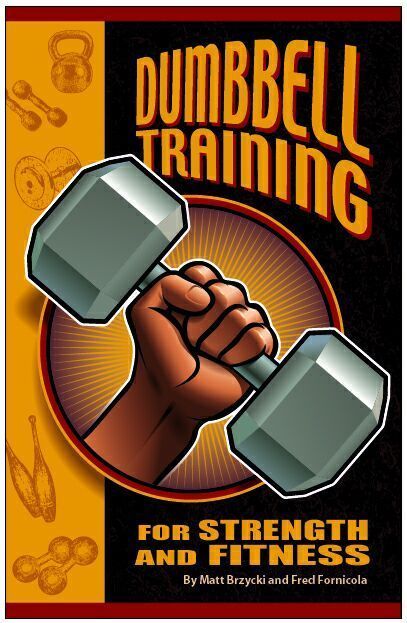
Just a quick update on Matt Brzycki's and my book "Dumbbell Training for Strength and Fitness".
First, Matt and I would like to thank all of those who purchased the book. Secondly, we are happy to announce that the book has been received very well - so much so that our distributor just told us that we are sold out (3,000 copies in 7 month's) so we OK'd a second printing to be done immediately.
For those interested in getting a copy, you can check your local Barnes and Noble or order from Amazon.com
If anyone wants a sneak peak you can visit my website, Premiere Personal Fitness.
Again, thank you very much for your support - it is greatly appreciated.
Fred Fornicola
Premiere Personal Fitness
Subscribe to:
Posts (Atom)